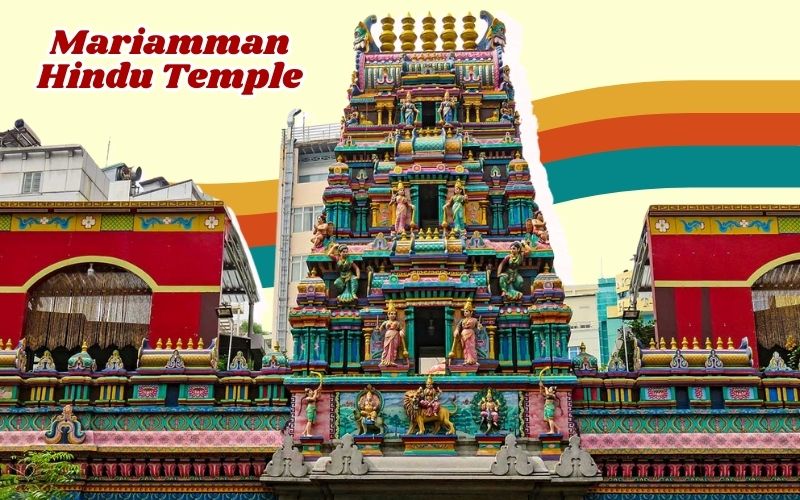
Few places in Ho Chi Minh City stop you cold the way the Mariamman Temple does. You turn off a busy commercial street, step through a gate crowned with painted deities, and suddenly the noise of Saigon drops away. Incense smoke curls past towers of sculpted gods, and somewhere inside, a prayer bell rings. The Mariamman Temple is one of the oldest and most visited Hindu temples in southern Vietnam, drawing Tamil Indian worshippers, Vietnamese Buddhists, and curious travelers from every corner of the world.
This guide covers everything you need to know before your visit: the temple’s origins, what to see, how to get there, and how to fit it into a broader Ho Chi Minh City tour.
What Is the Mariamman Temple?
The Mariamman Hindu Temple (also known as Chua Ba Mariamman in Vietnamese) is a Tamil Hindu temple built by the Indian merchant community that settled in Saigon during the French colonial period. The temple is dedicated to Mariamman, a goddess worshipped widely across South India and Sri Lanka as a protector against disease, drought, and misfortune. In the Tamil tradition, she is associated with rain, fertility, and the well-being of communities.
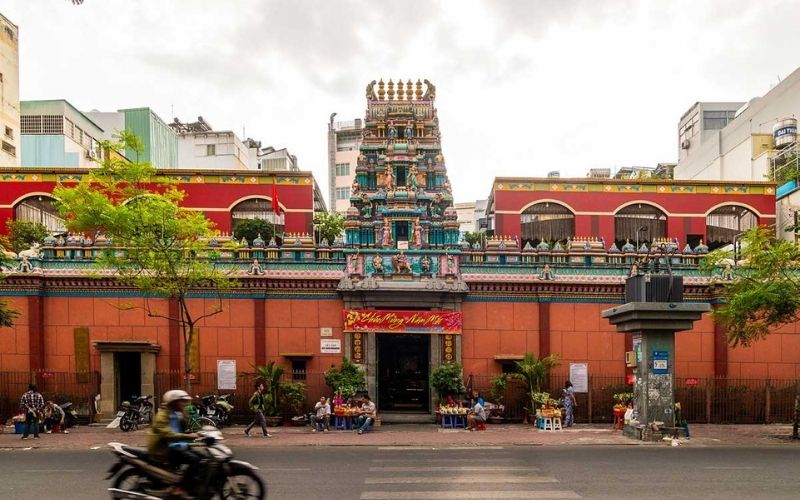
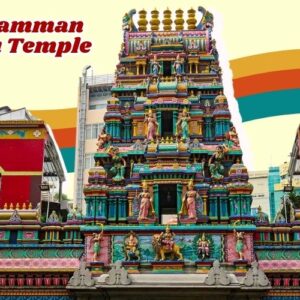
The Mariamman Hindu Temple stands as a colorful cultural landmark in the heart of Saigon.
What makes the Mariamman Temple in Ho Chi Minh City especially interesting is that it has outlasted the Indian community that built it. Most of the daily worshippers today are Vietnamese, many of them Buddhist, who adopted the temple’s goddess under the name “Ba Chua Xu” (Goddess of the Realm) and integrated her into their own spiritual practice. The temple is genuinely multi-faith in a way that feels organic rather than performative.
The building itself dates to the late 19th century, though it has been restored and extended several times since. It follows the Dravidian architectural style common to Tamil Nadu temples in South India: a stepped entrance tower (gopuram) covered in brightly painted figurines of gods, guardians, horses, and mythological animals.
Mariamman Hindu Temple’s Location
The Mariamman Temple sits in the heart of Saigon, Ho Chi Minh City’s main commercial and tourist centre, making it one of the most accessible religious sites in the city.
- Address: 45 Truong Dinh Street, Ben Thanh Ward, Ho Chi Minh City, Vietnam
The temple is roughly 700 metres from Ben Thanh Market and within easy walking distance of Bui Vien Street, Pham Ngu Lao backpacker area, and the city’s main hotel strip. Whether you are on foot, by taxi, or on a guided city tour, reaching it is straightforward.
Architecture and Layout: A Closer Look
The temple occupies a modest plot by the standards of major South Indian temples, but every square metre of it is used deliberately. Here is what you will encounter as you move through the space.
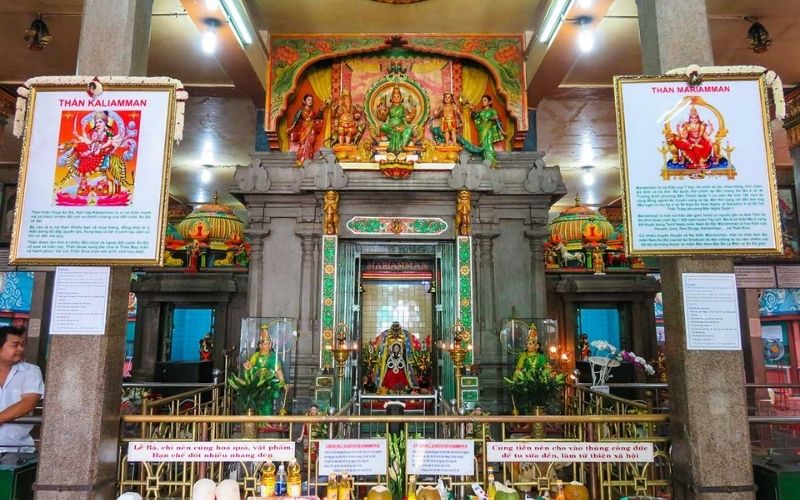
The main hall of the Mariamman Hindu Temple offers a sacred space for worship and cultural learning.
1. The Gopuram (Entrance Tower)
The first thing that grabs your attention is the gopuram, the stepped tower that marks the temple’s entrance on Truong Dinh Street. It rises several storeys and is decorated with dozens of hand-painted figurines: horses, elephants, nagas (serpents), divine guardians, and images of Mariamman herself. The colours are saturated and unapologetic: red, gold, green, blue. There is nothing subtle about it, and that is entirely the point. The gopuram in Dravidian temple architecture is a statement of sacred abundance, a visual feast meant to signal that you are leaving ordinary space and entering something different.
2. The Main Sanctum
Inside the main hall, the central shrine houses a statue of Mariamman adorned with garlands of fresh flowers, golden ornaments, and colourful saris. Offerings of fruit, flowers, and coconuts are arranged at her feet. Flanking the central deity are shrines to Murugan (god of war and victory, especially popular in Tamil worship) and Ganesh (the elephant-headed god of beginnings, widely revered across Hindu traditions). Oil lamps burn continuously, and the scent of jasmine and camphor fills the air.
The atmosphere is genuinely devotional. Even on weekday mornings, you will find people kneeling in prayer, circling the shrines clockwise in pradakshina (ritual circumambulation), or sitting quietly in contemplation. It is worth slowing down here rather than rushing through.
3. The Sacred Cow Statues
Near the entrance, two life-sized painted cow statues stand guard, which is typical of Tamil Hindu temples. Cows are sacred in Hindu tradition, associated with Kamadhenu, the divine bovine mother. Visitors often touch them as part of their prayers.
4. The Courtyard Shrines
Around the main hall, smaller shrines house various deities and offer quieter spots for individual prayer. The courtyard has a certain intimacy that larger temple complexes sometimes lack. Incense sticks and oil lamps are available for purchase near the entrance, and visitors of all backgrounds are welcome to make offerings.
5. The Upper Level
A steep staircase leads to an upper terrace where additional shrines and the rooftop figures are visible up close. From here you get a clear view of the gopuram carvings and the surrounding neighbourhood. It is not always open to visitors, so ask at the entrance.
The Street Around the Temple: Truong Dinh and Its Surroundings
Truong Dinh Street, where the temple sits, has its own character worth exploring. The immediate block around the temple is quiet and low-rise compared to the rest of Saigon, with a handful of small restaurants, tea stalls, and shops selling temple supplies like incense, flowers, and offering trays.
A few metres down the street in either direction you start to pick up the rhythm of Saigon’s everyday commerce: fabric sellers, noodle shops, hardware stores. It is one of those areas that has not been fully polished for tourism, which gives it a realness that some of the more famous streets lack.
What to do nearby:
- Walk five minutes north to reach the fringes of the Ben Thanh Market area, where you can browse street food stalls and souvenir shops.
- Head a few blocks south toward Pham Ngu Lao Street for budget cafes, rooftop bars, and the city’s backpacker accommodation cluster.
- The Jade Emperor Pagoda (a famous Taoist temple about 2 kilometres away) pairs well with the Mariamman Temple for a half-day tour focused on Ho Chi Minh City’s religious heritage.
- Bui Vien Walking Street is roughly 400 metres west, which comes alive after dark if you are extending your evening.
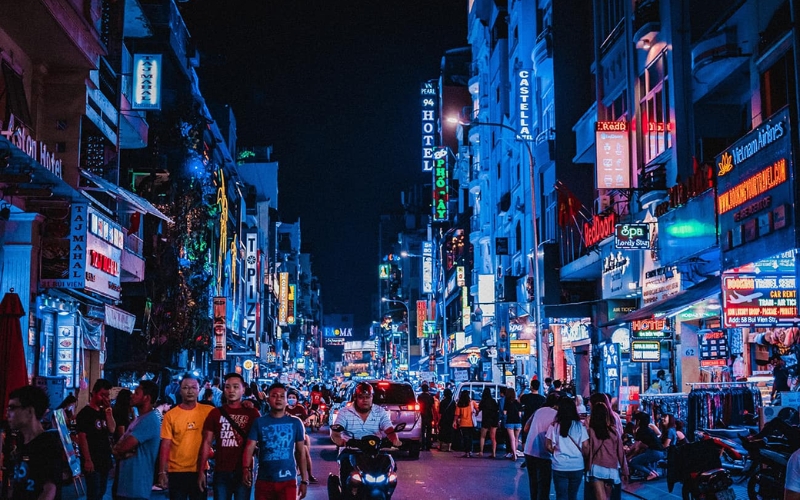
Bui Vien Street provides a bustling atmosphere
The neighbourhood is compact and walkable. Most visitors spend 20 to 40 minutes inside the temple and another 30 minutes exploring the surrounding streets. Let’s us customize your tour!
Festivals and Special Events
The Mariamman Temple is at its most alive during festival periods, and if your travel dates overlap with any of these, it is worth adjusting your schedule to be there.
- Thaipusam (January or February, depending on the Tamil calendar) is one of the major Tamil festivals dedicated to Murugan. Devotees carry ornate kavadi structures as acts of penance and gratitude, and the street outside the temple fills with music, flowers, and processions.
- Mariamman Festival (typically September or October) is the central annual celebration at this temple. For several days, the goddess statue is dressed in ceremonial finery, priests perform elaborate puja rituals, and the temple is open for extended hours. Vietnamese devotees mix with Tamil worshippers in one of the more genuinely cross-cultural events you will find in Ho Chi Minh City.
- Diwali (October or November) brings illuminations and sweet offerings to the temple, though it is less visually spectacular here than at some larger temples in India.
Even on an ordinary day, there is usually something happening: a private puja, a group of schoolchildren on a field trip, an elderly Vietnamese woman laying flowers at the shrine. The temple is not a museum piece.
Visitor Information: What You Need to Know
- Opening hours: The temple is generally open from 7:00 AM to 7:00 PM daily, including weekends and public holidays. Hours may extend during festival periods.
- Entry fee: Free to enter. Small donations are appreciated and go toward the temple’s upkeep. Incense sticks, flowers, and offering trays can be purchased on-site for around 10,000 to 20,000 VND (~$0.38 to ~$0.77).
- Dress code: Shoulders and knees should be covered. Sarongs or cover-ups may be available at the entrance for those who need them. Shoes are removed before entering the main hall.
- Photography: Photography is generally permitted in the courtyard and around the exterior. Inside the main sanctum, use discretion and avoid flash photography during active prayer sessions. Always ask before photographing worshippers directly.
- Language: Signage inside the temple is limited. Most temple staff speak Vietnamese; some have basic English.
Best Time to Visit the Mariamman Temple
Ho Chi Minh City is warm year-round, with average temperatures between 25°C (77°F) and 35°C (95°F). There are two distinct seasons to be aware of.
- Dry season (December to April) is the most comfortable time to visit. Humidity is lower, and you are unlikely to get caught in a downpour. Temperatures in the hottest months of March and April can reach 38°C (100°F), so visiting early in the morning, around 7:00 AM to 9:00 AM, is a good idea.
- Wet season (May to November) brings afternoon rain showers, usually heavy but short. The city stays lush and green, and the temple is generally less crowded. If you are visiting between June and September, carry a light rain jacket or umbrella.
For the temple itself, early morning is almost always the best time: the light is softer, the crowds are thinner, and the morning puja rituals are more likely to be in progress.
How to Get There
The Mariamman Temple’s location in central Ho Chi Minh City makes it easy to reach by multiple methods.
- On foot: From Ben Thanh Market, it is about a 10-minute walk south along Nam Ky Khoi Nghia Street, then left onto Truong Dinh.
- By taxi or ride-hailing app: Grab (the regional equivalent of Uber) is reliable and inexpensive. A ride from most District 1 hotels costs under 30,000 VND (~$1.15).
- By motorbike taxi (xe om): Available throughout the city and slightly cheaper than Grab, though less predictable.
- On a guided city tour: The Mariamman Temple is a standard stop on Ho Chi Minh City day tours, usually paired with the Reunification Palace, Ben Thanh Market, and the War Remnants Museum.
There is no dedicated parking, but motorbike parking is available on the street for a small fee of around 5,000 VND (~$0.19).
Fitting the Temple Into a Broader Vietnam Trip
The Mariamman Temple works well as a standalone stop on a Ho Chi Minh City day, but it also fits naturally into a longer itinerary through southern Vietnam.
If you are spending a few days in the south, consider pairing it with a Mekong Delta tour, which gets you out of the city and into the river landscape that defines the region. The contrast between temple incense and open-water markets is a good way to understand how many different Vietnams exist within a single short trip.
For travelers doing the length of the country, southern Vietnam is typically the starting or ending point of a full Vietnam tour. Ho Chi Minh City rewards a day or two of exploration before heading north to Hoi An, Hue, Hanoi, or the highlands.
Conclusion: Quick Reference Overview
| Detail | Information |
| Full name | Mariamman Hindu Temple (Chua Ba Mariamman) |
| Dedicated to | Goddess Mariamman |
| Location | 45 Truong Dinh Street, Ben Thanh Ward, Ho Chi Minh City |
| Opening hours | 7:00 AM to 7:00 PM daily |
| Entry fee | Free |
| Dress code | Shoulders and knees covered; shoes removed at entrance |
| Best time to visit | Early morning, dry season (December to April) |
| Nearest landmark | Ben Thanh Market (~700m) |
| Key festivals | Mariamman Festival (Sep/Oct), Thaipusam (Jan/Feb) |
| Typical visit duration | 20 to 40 minutes |
| Recommended for | Culture, religion, architecture, photography |
The Mariamman Temple in Ho Chi Minh City is one of those rare sites that rewards both the hurried visitor and the one who lingers. You can spend 20 minutes taking in the gopuram and moving through the shrines, or you can sit in the courtyard for an hour and watch the city’s religious life unfold around you. Either way, it is a different kind of Ho Chi Minh City experience from the war museums and colonial boulevards, and a reminder that Saigon’s identity has always been shaped by many communities at once.
If you are planning a trip to southern Vietnam and want to build an itinerary around the city’s landmarks, our Ho Chi Minh City tours cover the temple alongside the city’s other unmissable sites. Reach out to us now for planning your best trip to experience the Mariamman Temple Ho Chi Minh City!
>>> Refer to Mariamman Temple, Ho Chi Minh City – Wikipedia.
Read more: