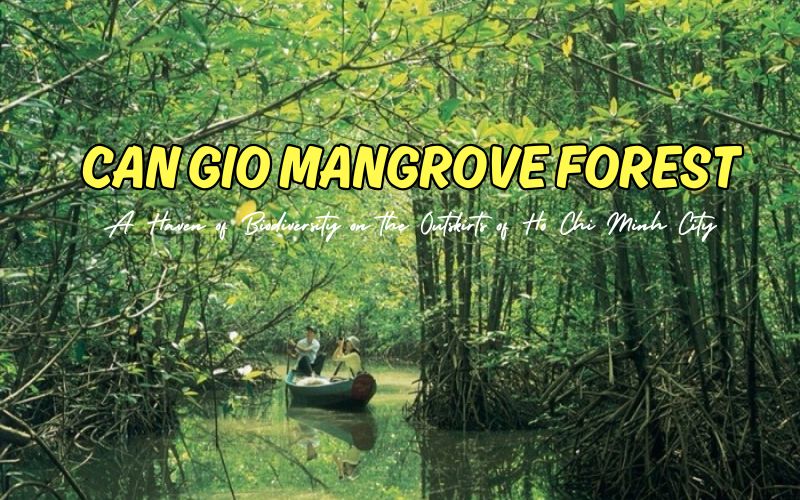
Just an hour south of Ho Chi Minh City, the Can Gio Mangrove Forest feels like a different world. The noise of the city drops away, replaced by the sounds of water, birds, and the occasional howl of a macaque in the treetops. If you are planning a trip to southern Vietnam and wondering whether Can Gio deserves a spot on your itinerary, the short answer is yes, especially if you are tired of the usual city circuits.
This guide covers everything you need to know: where it is, how to get there, what to see, when to go, and how to make the most of a Can Gio Mangrove Forest tour.
What Is the Can Gio Mangrove Forest?
The Can Gio Mangrove Forest (Rung Sac) is a coastal forest area located in Ho Chi Minh City, about 60 km (37 miles) southeast of the city center. It covers roughly 75,000 hectares, making it one of the largest mangrove forests in Southeast Asia and the world’s first UNESCO-recognized mangrove biosphere reserve (designated in 2000).
>>> Source: Can Gio mangrove – Man and the Biosphere Programme (MAB).
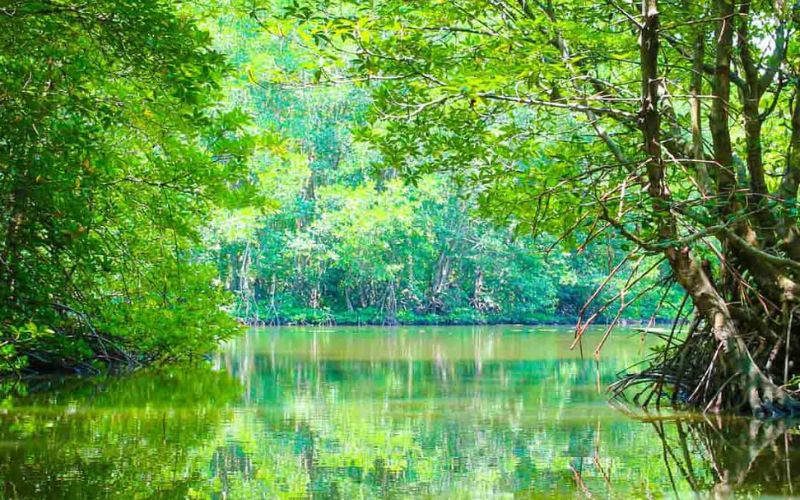
The magnificent scene of Can Gio Mangrove Forest
What makes it unusual is its history. During the Vietnam War, the forest was almost completely destroyed by Agent Orange defoliation. What you see today was replanted from scratch between the late 1970s and 1990s, and the fact that it has recovered to this extent is genuinely remarkable. UNESCO described it as “a model of forest rehabilitation” and visiting it, it is hard to argue with that assessment.
The forest is home to over 200 species of birds, more than 130 species of fish, saltwater crocodiles, sea turtles, and large populations of long-tailed macaques. The water runs through a network of tidal channels and rivers, and the tree roots form dense tangles along every bank.
Where Is Can Gio Mangrove Forest?
Can Gio Commune is the southernmost district of Ho Chi Minh City. The forest sits within a zone bordered by the Dong Nai River to the north, the Soi Rap River to the west, and the South China Sea to the east and south.
Getting there from Ho Chi Minh City:
- By car or motorbike: Take National Highway 1 south, then cross the Can Gio ferry at Binh Khanh. Total journey is around 1.5 to 2 hours depending on traffic and ferry wait times.
- By organized tour: Most Can Gio tours depart from District 1 in Ho Chi Minh City early in the morning (around 7:00 AM) and return by late afternoon.
- By public bus: Bus 90 runs from Ben Thanh Market to Can Gio, but it involves a long travel time and is not convenient for first-time visitors with limited time.
The ferry crossing at Binh Khanh is free for foot passengers and motorcycles. Cars pay a small fee of around 45,000 VND (~$1.73). The crossing takes about 10 minutes and offers good views over the river. Because this is a special location, we recommend visiting it on a pre-designed tour, but we can also customize a tour entirely to your liking.
Best Time to Visit Can Gio Mangrove Forest
Can Gio has two seasons: wet (May to November) and dry (December to April).
- Dry season is generally easier for travel. Roads stay passable, boat trips are more comfortable, and the salt fields are active. Temperatures sit between 27°C (81°F) and 35°C (95°F). This is when most visitors come.
- Wet season brings daily afternoon rain, higher humidity, and occasional flooding on the lower forest roads. The upside: the forest is denser and greener, and wildlife sightings (particularly birds) can actually improve because the canopy is fuller. Temperatures are similar, but with a higher heat index due to humidity, often feeling like 38°C to 40°C (100°F to 104°F) during peak afternoon hours.
If you want the bat cave at Vam Sat, any time of year works. If you want the salt fields, come between December and April.
Can Gio Mangrove Forest Highlights
This is the heart of what makes Can Gio worth the trip. The forest is not a single attraction but a collection of ecosystems, historical sites, wildlife zones, and waterways that reward slow exploration.
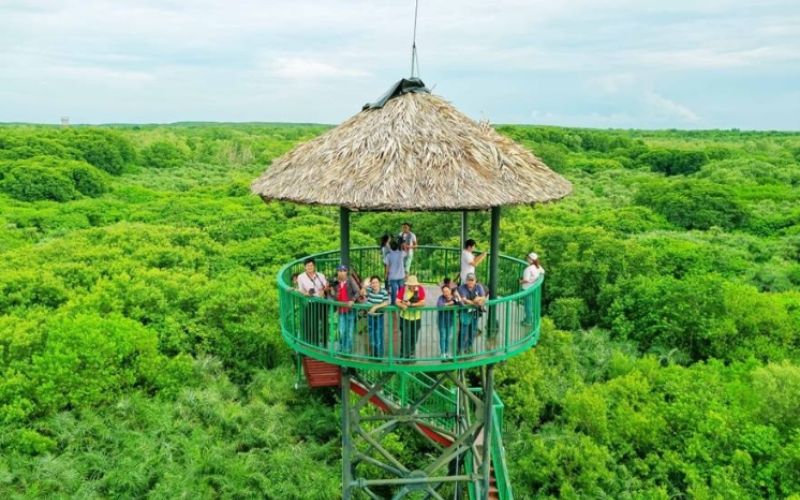
Bird-watching tower
1. Monkey Island (Dao Khi)
Monkey Island is the most popular stop on any Can Gio Mangrove Forest tour, and it earns its reputation. The island is home to hundreds of long-tailed macaques that live semi-wild among the mangroves. They are habituated to human visitors but are genuinely wild animals, and the dynamic is fascinating to watch. The monkeys move in large social groups, groom each other, squabble, steal food from inattentive tourists, and occasionally swim across the narrow channels between tree islands.
The island also has a small crocodile enclosure and a freshwater turtle pool. Wildlife shows run several times daily, though these are aimed mainly at domestic visitors and may not appeal to everyone.
A few things to know before you visit: do not feed the monkeys directly with your hands, do not wear loose jewelry or dangling sunglasses, and keep your bags zipped. The monkeys are quick. One traveller reported losing a water bottle within 30 seconds of arriving. The locals find this deeply funny.
2. Vam Sat Eco-Tourism Area
Vam Sat is the part of Can Gio that most nature-focused visitors prefer. It is quieter, less developed, and more genuinely wild-feeling than Monkey Island.
Key experiences at Vam Sat:
- Boat trips through the mangrove channels: Narrow motorised boats take you deep into the forest interior, where the canopy closes over the water and the bird activity picks up considerably. Early morning trips (before 8:00 AM) give the best birdwatching conditions.
- Bat cave (Hang Doi): At dusk, tens of thousands of fruit bats emerge from the cave in one of the more extraordinary wildlife spectacles in southern Vietnam. If your timing aligns, this alone justifies the trip.
- Bird observation towers: A series of wooden towers rise above the canopy at various points in Vam Sat. The view from the top across the unbroken forest is worth the climb.
- Saltwater crocodile pools: Vam Sat maintains several large pools housing saltwater crocodiles. They can reach over 4 metres in length, and seeing one up close (through proper fencing) recalibrates your sense of scale.
The entrance fee to Vam Sat is around 80,000 VND (~$3.08) per person. Boat hire for the mangrove channel trip costs an additional 200,000 to 400,000 VND (~$7.70 to $15.40) depending on group size and duration.
3. The War Memorial Zone (Rung Sac Special Forces Base)
During the Vietnam War, the Can Gio forest was used as a guerrilla base by the Viet Cong’s Rung Sac Special Forces brigade. The unit conducted operations against US and South Vietnamese naval vessels using the waterways as cover, and the dense mangrove roots made the area extremely difficult to penetrate.
Today, part of the forest has been preserved as a historical memorial. Visitors can walk through reconstructed bunkers, tunnels, and command posts. It is not as extensively developed as the Cu Chi Tunnels, but it tells a different part of the same war story. The site also explains the scale of the deforestation campaign, which used Agent Orange to remove the tree cover that was protecting the guerrillas. Understanding what the forest looked like after that destruction, and then walking through the recovered canopy, gives the whole place a different weight.
Guides at the memorial site speak Vietnamese and some basic English. If you are coming independently, hiring a local guide (around 150,000 VND / ~$5.77 for a 1-hour tour) adds considerable context.
4. Can Gio Beach (Bai Bien 30/4)
Can Gio has its own beach, named 30/4 after the date of Vietnamese reunification. It is a long stretch of grey-brown sand that sees very little international tourism. The water is murky due to river sediment, so this is not a swimming beach in the conventional sense. But it is popular with local families on weekends, lined with seafood restaurants and coconut stalls, and it has a genuinely off-the-beaten-track quality that is increasingly rare near Ho Chi Minh City.
If you are after white sand and clear water, Can Gio beach may disappoint. If you are interested in seeing how Vietnamese families actually spend a day at the seaside, it is worth an hour.
5. Can Gio Town and the Salt Fields
The main town in Can Gio District is also called Can Gio, and it is a working fishing settlement. The streets near the market smell strongly of dried seafood. The market itself sells a range of local products: dried shrimp, fish sauce, salted fish, and the local specialty, dried jellyfish.
On the road between the town and the forest, large flat salt fields stretch out on either side. Salt production has been practiced here for generations. During the dry season (roughly November to April), workers spread seawater across shallow pans and rake the accumulated salt into piles. The fields look good in the late afternoon light.
6. Canal Boat Rides Through the Mangroves
Independent of the Vam Sat boat trips, several operators along the main canal road offer shorter flat-bottomed boat rides through the tighter interior waterways. These informal trips (typically 30 to 60 minutes, priced at around 100,000 to 150,000 VND / ~$3.85 to $5.77 per person) give close access to the root structures that define the mangrove ecosystem. Tree roots arch out of the black mud at every angle, and the filtered light through the canopy gives even a short trip a slightly otherworldly quality.
These smaller operators do not advertise much. You will find them at the canal edge near the main entrance zone. Early morning, when mist sits over the water, is the best time to go.
Wildlife in Can Gio Mangrove Forest Vietnam
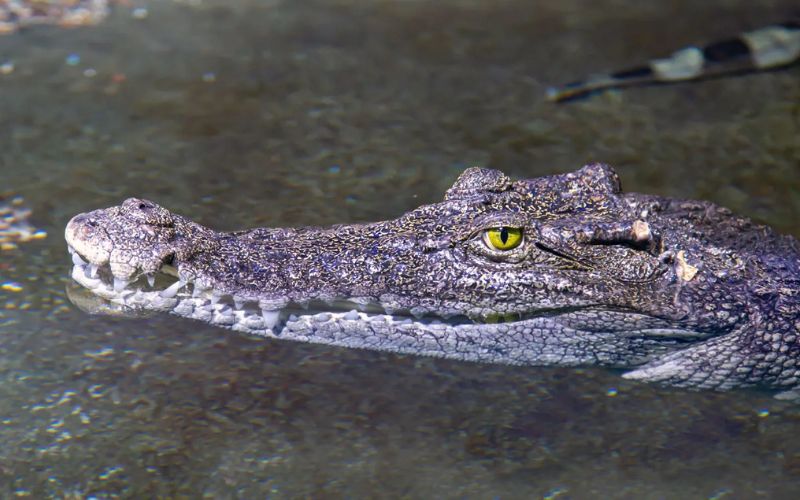
Encountering a Siamese Crocodile in its natural habitat at Can Gio Forest.
The ecological recovery of Can Gio since the 1980s has been well-documented by Vietnamese and international researchers. The forest now supports a range of species that were absent or rare just two generations ago.
Notable wildlife in the forest includes:
- Long-tailed macaques (most visible at Monkey Island and along the canals)
- Smooth-coated otters (seen occasionally near the canal entrances at dusk)
- Saltwater crocodiles (up to 4 metres, held in managed pools at Vam Sat)
- Over 200 bird species, including purple herons, kingfishers, cormorants, and storks
- Irrawaddy dolphins (reported occasionally in the Dong Nai River channels, though sightings are not reliable)
- Sea turtles (nesting season is April through July)
The UNESCO biosphere reserve status means the forest is zoned into core protected areas, buffer zones, and transition zones. Independent access to the core zone is restricted. Most tour operators work within the buffer and transition zones, which still contain high wildlife density.
Can Gio Mangrove Forest Tour Options
Most visitors come to Can Gio on a day trip from Ho Chi Minh City. The standard Can Gio Mangrove Forest tour runs 8 to 10 hours and typically includes:
- Transport by air-conditioned vehicle
- Ferry crossing at Binh Khanh
- Monkey Island visit
- Boat trip through the mangrove canals
- Lunch at a local restaurant (often including fresh seafood)
- Entrance fees
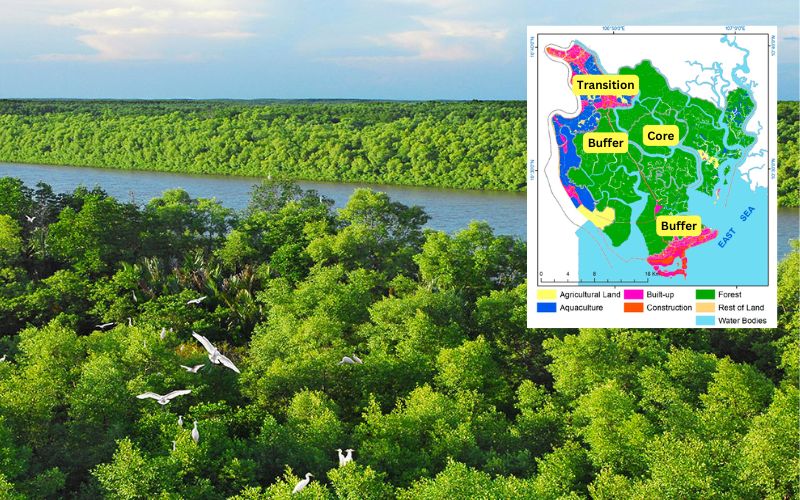
Different Zones of Can Gio Mangrove Forest
Prices range from around $25 to $65 per person depending on group size, guide quality, and whether additional sites like Vam Sat or the war memorial are included. Private tours tend to allow a more flexible pace and more time in the less-visited areas.
For a well-structured southern Vietnam itinerary that combines Can Gio with other destinations like the Mekong Delta, Cu Chi Tunnels, and Ho Chi Minh City itself, IDC Travel offers Southern Vietnam tours that can be customized to include Can Gio as either a standalone day trip or part of a longer route.
Families, in particular, find Can Gio works well as a half-day or full-day excursion from the city. Our Vietnam family tours have included Can Gio as a child-friendly option because of the monkey interaction, the boat rides, and the relatively easy terrain.
What to Eat in Can Gio
The seafood in Can Gio is the main culinary draw, and it is genuinely good. The district sits at the junction of the Dong Nai River and the sea, which means the catch is varied and fresh.
Worth trying:
- Grilled blood cockles (so huyet): Served with lime, chili, and a light dipping sauce. A staple in the coastal restaurants near Can Gio town.
- Steamed mangrove crab: The local crab is smaller than the farmed variety but has more flavour. Order it by the kilogram; expect to pay around 200,000 to 350,000 VND (~$7.70 to $13.46) per kg depending on season.
- Dried squid (muc kho): Sold everywhere along the main road. Best eaten grilled over charcoal and dipped in chili sauce.
- Coconut water: The roadside stalls sell fresh coconuts for about 15,000 to 20,000 VND (~$0.58 to $0.77) each. In the heat, this is one of the better decisions you will make all day.
The restaurants around Monkey Island and along the main Can Gio road are basic but functional. Prices are lower than Ho Chi Minh City, and the portions are generous.
Practical Information
- Entrance fees: The main forest zone charges around 30,000 to 50,000 VND (~$1.15 to $1.92) per person. Vam Sat has a separate entrance fee of around 80,000 VND (~$3.08). Monkey Island entrance is typically included in organised tours but costs around 50,000 VND (~$1.92) if visiting independently.
- What to wear: Lightweight, light-coloured clothing. Long sleeves help with both the sun and mosquitoes. Good walking shoes or sandals that can get wet. A hat is not optional in the dry season.
- Mosquitoes: Present throughout the forest, especially near the water. Bring repellent with at least 15% DEET. The Vam Sat area in particular has significant mosquito activity in the wet season.
- Connectivity: Mobile signal is patchy in the deeper forest zones. Download an offline map of the area before you go if you plan to explore independently.
- Currency: Can Gio operates primarily on cash. ATMs exist in the main town but are sometimes unreliable. Bring Vietnamese dong with you; smaller vendors do not accept USD.
Conclusion: Is Can Gio Worth Visiting?
| Feature | Details |
| Name | Can Gio Mangrove Forest (Vietnamese: Khu du tru sinh quyen rung ngap man Can Gio / Rung Sac) |
| Location | The downstream area of the Dong Nai – Saigon river system, Ho Chi Minh City, Vietnam (~60 km (37 miles) southeast from Ho Chi Minh City, about 1.5 to 2 hours by road) |
| Size | ~75,000 hectares |
| Phone |
|
| bqlrphdd.snnmt@tphcm.gov.vn | |
| Website | https://www.rungngapmancangio.org/ |
| UNESCO status | Biosphere Reserve (designated 2000) |
| Best season | November to April (dry season) |
| Temperature range | 27°C to 35°C (81°F to 95°F) dry season; feels 38 to 40°C (100 to 104°F) wet season |
| Top attractions | Monkey Island, Vam Sat Eco Zone, War Memorial, Can Gio Beach, Canal Boat Rides |
| Typical tour duration | 8 to 10 hours (day trip from HCMC) |
| Main wildlife | Macaques, saltwater crocodiles, 200+ bird species, sea turtles |
Can Gio is one of those places that does not try to be impressive. There is no elaborate infrastructure, no tourist village built around it. What it has is a working ecosystem, an unusual history, and a quality of quiet that is hard to find this close to a major city. The macaques at Monkey Island make it good for families and first-timers. The Vam Sat bat cave and the early morning canal boat trips make it good for travelers who want something more. The war memorial makes it worth thinking about.
If your Vietnam trip includes Ho Chi Minh City, Can Gio fits naturally as a day excursion. If you are building a broader southern Vietnam itinerary, we can incorporate it into a route that also covers the Mekong Delta, Cu Chi, and other key southern destinations. You can browse Ho Chi Minh City tours or explore the full range of Vietnam tours to see what fits your schedule. Contact to us for more useful advices!
, , , , , , , , , , ,,
Read more: