Ho Chi Minh City moves fast. The traffic, the noise, the constant construction, after a few days of city touring, most travelers start looking for somewhere to breathe. Binh Quoi Tourist Village is that place. Sitting just 8 to 10 km from the city center, on the Thanh Da Peninsula along the Saigon River, it gives you the feel of the Mekong Delta countryside without leaving Saigon. If your Vietnam trip is heavy on urban sightseeing, an afternoon here resets everything.
This guide covers what Binh Quoi Tourist Village actually is, where it sits, what to do across its three zones, what to eat, when to go, and how it fits into a broader southern Vietnam itinerary.
What Is Binh Quoi Tourist Village?
Binh Quoi Tourist Village (Vietnamese: Lang du lich Binh Quoi) is a riverside leisure complex in Binh Quoi Commune, managed by the Saigontourist Group.
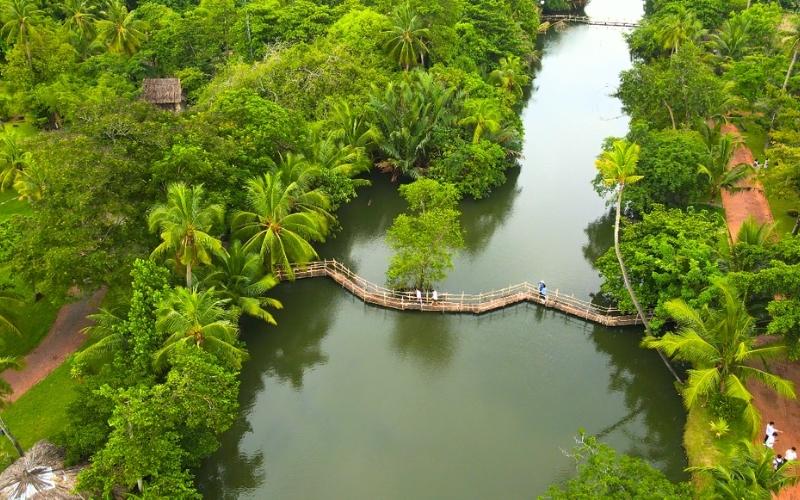
Beautiful Landscape of Binh Quoi Village
The Binh Quoi Tourist Area I was established by the Vietnamese government in 1975 and 1976, while Binh Quoi Tourist Area II was built from 1979 to 1980, and the Tourist Village was formally established in 1994.
In 2004, the village underwent a significant expansion costing 60 billion VND (approximately $3.8 million USD at the time), increasing its area from 3.5 hectares to 8.6 hectares, with new culinary facilities and traditional architecture added throughout.
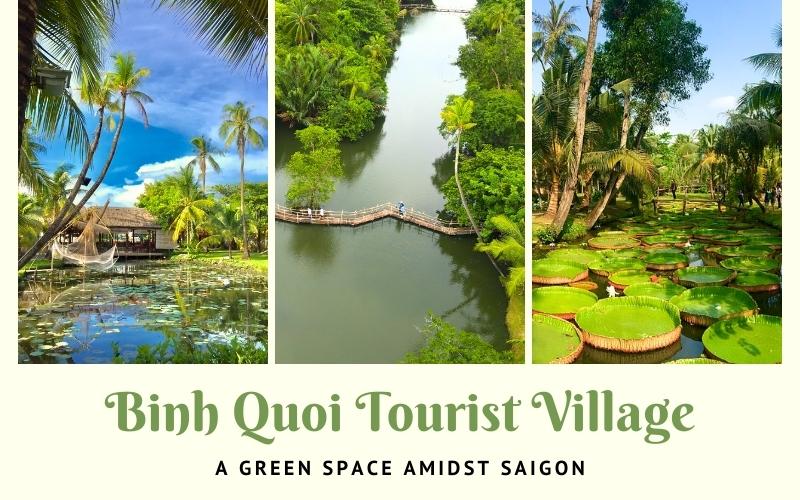
The concept is straightforward: bring a piece of the Mekong Delta into the city. Once you arrive, you find a blue canal, coconut trees, lily ponds, beautiful walking paths, a bamboo monkey bridge, and rural cottages. It works better than you might expect. The grounds feel genuinely quiet, especially on weekday mornings, when the contrast with the surrounding city traffic is almost surreal.
Location of the Binh Quoi Tourist Village
- Address: 1147 Binh Quoi Street, Binh Quoi Ward, Ho Chi Minh City, Vietnam.
The Tourist Village sits on the Thanh Da Peninsula on the Saigon River, approximately 8 km from the city center, a 20 to 30-minute drive depending on traffic.
How to get there:
- By Grab or taxi: Input “1147 Binh Quoi, Phuong 28, Binh Thanh” as your destination. The fare is approximately 100,000 to 150,000 VND (~$3.80 to $5.70) depending on your starting point in Ho Chi Minh City.
- By motorbike: Take Nguyen Huu Canh Street toward Binh Quoi Ward, continue to Nguyen Van Troi Street, turn left, then right onto Binh Quoi Street. Follow it for about 1 km to the entrance.
- By bus: Bus number 36 from Ben Thanh Market goes directly to Binh Thanh District. Get off at the Binh Quoi stop, then walk 10 to 15 minutes to the village.
- Parking is available on site for those driving their own vehicle.
The journey from the city center typically takes between 15 to 30 minutes by car or motorbike, depending on traffic conditions.
Best Time to Visit Binh Quoi Tourist Village
Ho Chi Minh City has two seasons: dry (November to April) and wet (May to October). The dry season is the more comfortable time to visit Binh Quoi, with temperatures around 27 to 32°C (80 to 89°F) and low humidity. During the wet season, afternoon rain showers are common, but they usually pass quickly and the grounds stay green.
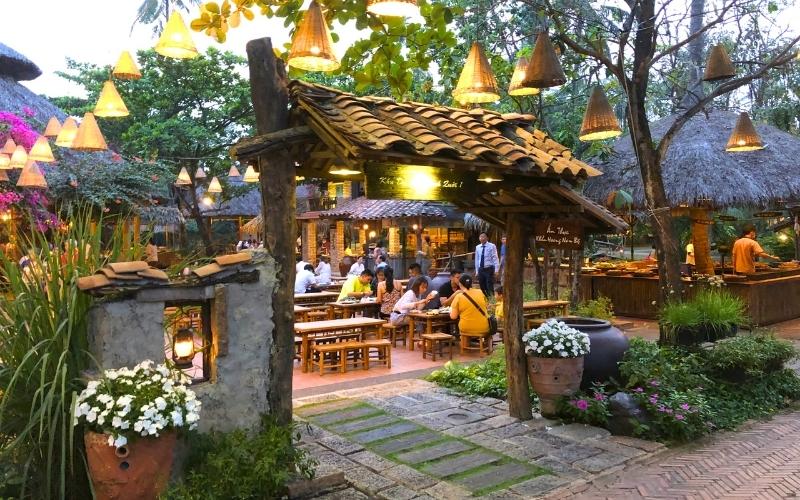
A Corner of Binh Quoi Tourist Village
By time of day:
- Weekday mornings: fewest crowds, best for photography and quiet walks
- Weekend evenings from 17:00: the buffet and live performances are only available then, and sunset over the Saigon River is genuinely good
It is not recommended to visit at noon on account of the heat. It is convenient to book seats in advance for live musical shows, and a mosquito repellent is useful when visiting after sundown.
By day of week:
- Weekday mornings: peaceful, near-empty, ideal for solo travelers or couples who want space
- Friday and Saturday evenings: buffet and performances at Binh Quoi 1
- Sunday: busiest, but full program running across all three zones
The Three Zones of Binh Quoi Tourist Village
The village is split into three separate areas along Binh Quoi Street. Each has a distinct character. Most travelers spend time in Binh Quoi 1, but if you have a full day, all three are worth visiting.
Binh Quoi 1: The Main Hub
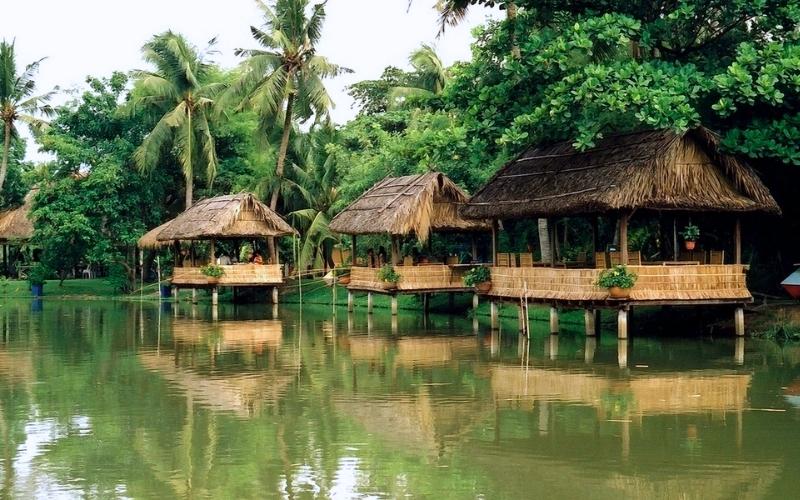
Peaceful waterfront huts at Binh Quoi 1 offer a serene countryside escape.
Binh Quoi 1 is the most popular spot in the village, with a 300-seat restaurant, the “Khan Hoang Nam Bo” Buffet with hundreds of folk dishes, and traditional music performances including Don Ca Tai Tu. The buffet runs on Friday and Saturday evenings from 17:00 to 20:00, and on Sundays and public holidays.
The area includes a 7,000-square-meter garden lawn suitable for photography, picnics, group games, sailing, and fishing. The Hoi Ngo Assembly Hall hosts painting, sculpting, and music programs for visiting groups. Cultural festivals like the My Rice Grain Festival and Discovering Vietnamese Folk Culture program are held here regularly.
Entrance fees at Binh Quoi 1:
- Adults: 130,000 VND (~$4.95)
- Children: 90,000 VND (~$3.43)
- Weekend buffet (adults): ~270,000 to 290,000 VND (~$10.30 to $11.05)
Binh Quoi 2: Sports and Water Activities
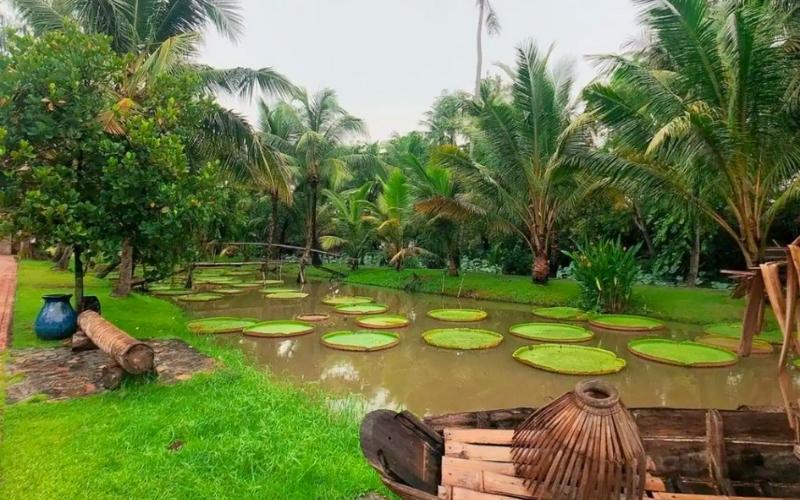
The giant lily pads at Binh Quoi 2 offer a peaceful glimpse of rural Southern beauty.
Binh Quoi 2 has an area of 25,380 square meters with a buffet area serving more than 70 seafood dishes, a riverfront restaurant, karaoke rooms, international-standard tennis courts, a swimming pool, a children’s playground, and canoe services. If your group includes teenagers or active travelers, this is the zone to spend a few hours.
Water activities available here include paddleboats on the canal, water skiing, and fishing. The swimming pool is one of the better outdoor pool options in this part of Ho Chi Minh City, especially for families who want to cool off in a green setting rather than a hotel lobby.
Binh Quoi 3 (Quan Xua): The Ancient Garden
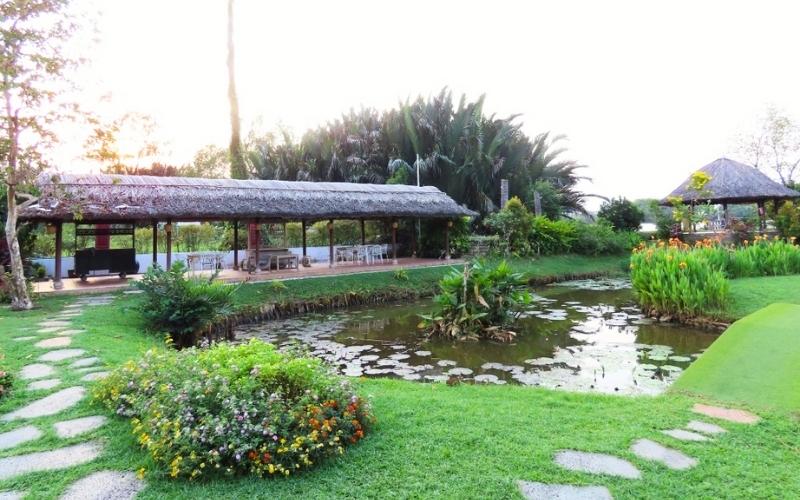
Binh Quoi 3 combines rustic architecture with elegant gardens for a quiet riverside retreat.
Binh Quoi 3, also known as the Ancient Garden, is designed in a traditional style that creates a sense of closeness and harmony with nature. The area sits right by the Saigon River, making it an ideal spot for families with children to enjoy a quieter green environment.
This part of Binh Quoi Tourist Village is particularly recommended for families with children, as it has a big green garden and an outdoor space with activities including swings, seesaws, and more. It also offers restaurant options that serve Western European cuisine.
Binh Quoi 3 restaurant serves dishes prepared from clean vegetables grown on-site following a controlled quality process, alongside traditional Mekong Delta recipes. It is also a popular venue for private events including weddings, birthdays, and corporate conferences, with 19 meeting rooms across the village complex totaling capacity for 2,700 guests.
What to Do at Binh Quoi Tourist Village
The activities here are not extreme or adventurous. That is the point. Binh Quoi is for slowing down.
On the water:
- Paddleboats on the canal (~46,500 VND, ~$1.77 per rental)
- Fishing from the bamboo bridge
- Boat rides along the Saigon River toward Ben Duoc Underground Tunnels and Lai Thieu Fruit Gardens
- Water skiing at Binh Quoi 2
On land:
- Walking the garden paths and crossing the bamboo monkey bridge
- Photography in the lawn areas and along the riverbank (especially beautiful around sunset)
- Tennis at the Binh Quoi 2 courts
- Swimming in the outdoor pool
Cultural experiences:
- Evening traditional music shows including the “Ky Yen Festival”, “Southern amateur singing on Ghe Hau”, and “Traditional Vietnamese Wedding” performances, which draw both local and international visitors.
- The weekly outdoor “Reclaiming Southern Food” buffet program.
- Visiting the Hoi Ngo Assembly Hall for rotating art and music exhibitions.
Most visitors who leave strong reviews recommend arriving around 5 pm to catch the buffet at sunset. The light over the river at that time, combined with the live music that usually plays on weekend evenings, makes for a genuinely good evening out.
Food and Dining at Binh Quoi
Eating is the main draw for many visitors, and the food is taken seriously here. The village serves traditional southern Vietnamese cuisine and features a three-level, 700-seat floating restaurant in Bach Dang Harbor.
The weekend buffet at Binh Quoi 1 is the one most people talk about. The weekly outdoor culinary event, titled “Reclaiming Southern Food”, features an array of historic dishes from the southern region, prepared by local cooks. The spread typically includes grilled river fish, fresh seafood, southern-style clay pot dishes, rice paper rolls, and various regional specialties that rarely appear on tourist restaurant menus.
The village restaurant serves famous grilled foods and Vietnamese traditional specialties, and can accommodate large parties.
A few practical notes on dining:
- Most vendors at the outdoor buffet do not accept credit cards. Bring cash in VND.
- The buffet menu is not vegetarian-friendly. Most dishes contain meat or seafood.
- The Dung Dinh Cafe chain within the complex is a good spot for coffee before or after a walk through the gardens.
- Binh Quoi 3 offers Western menu options for travelers who want something familiar.
Cultural Events and Festivals
Binh Quoi Tourist Village has hosted large-scale cultural events including a 300-year Saigon commemorative buffet, the Vietnamese Folk Culture Exploration program, a Vietnam-Japan Cultural Festival, and seasonal programs like the Southern French Wine Festival and German Beer Festival Oktoberfest. The village has also been a key organizer of the Nguyen Hue Flower Street event during the Lunar New Year (Tet) since 2004.
If you are visiting around Tet, the decorations and atmosphere at Binh Quoi are worth experiencing separately from the downtown celebrations. The pace is calmer and the traditional elements more prominent.
How Binh Quoi Fits Into a Ho Chi Minh City Itinerary
Most visitors to southern Vietnam spend two to four days in Ho Chi Minh City before heading to the Mekong Delta, Cu Chi Tunnels, or continuing north. Binh Quoi works well as a half-day or full evening addition to a city itinerary, particularly on a day when the main sights (War Remnants Museum, Ben Thanh Market, Reunification Palace) have already been covered.
It pairs naturally with a morning visit to the Cu Chi Tunnels, followed by an afternoon at Binh Quoi. The contrast between the two sites is interesting in itself: the tunnels show one version of southern Vietnam’s past, the village shows another.
For travelers on southern Vietnam tours that include Ho Chi Minh City as a base, Binh Quoi is a low-effort, high-reward addition that does not require a full day. For families specifically, the combination of water activities, green space, and cultural food programs makes it one of the better half-day options in the city.
If you are planning broader Vietnam tours that extend beyond the south, keep in mind that Binh Quoi represents a cultural type, the traditional riverside village landscape, that you will encounter again in the Mekong Delta. Visiting here first gives you a useful frame of reference.
For those who want guided access to Ho Chi Minh City’s less-visited spaces alongside the major landmarks, Ho Chi Minh City tours with IDC Travel can be customized to include an evening at Binh Quoi.
Binh Quoi Tourist Village: Quick Reference
| Detail | Information |
| Full name | Binh Quoi Tourist Village (Lang du lich Binh Quoi) |
| Address | 1147 Binh Quoi Street, Binh Quoi Ward, HCMC |
| Tel. | (+84)901 889 708 |
| Website | https://binhquoi.vn/en/ |
| Distance from city center | 8 to 10 km (20 to 30 minutes by car) |
| Opening hours | Daily 9:00 AM to 11:00 PM (buffet: Fri/Sat/Sun evenings from 17:00) |
| Entrance fee |
|
| Weekend buffet price | From 270,000 VND (~$10.30) per adult |
| Zones | Binh Quoi 1 (dining, culture), Binh Quoi 2 (sports), Binh Quoi 3 (garden/family) |
| Best visit time | Weekday mornings or Friday/Saturday/Sunday evenings |
| Payment | Mostly cash (VND); credit cards limited at outdoor stalls |
| Recommended season | November to April (dry season), 27 to 32°C (80 to 89°F) |
Binh Quoi Tourist Village is not a grand architectural site or a museum. It is a good afternoon. The food is worth the trip on its own, especially if you catch the weekend buffet. The river views at sunset are genuinely calming after days of navigating city traffic. And for families or groups that want to do something beyond the standard tourist circuit, it offers enough variety across its three zones to fill a comfortable half-day.
For travelers building a longer itinerary through southern Vietnam or planning Vietnam holidays that include both Ho Chi Minh City and the Mekong Delta, IDC Travel’s team can help you sequence visits so that Binh Quoi works as a natural introduction to the countryside experiences ahead. Get in touch to start planning.
Read more: