Thailand itinerary 7 days is enough if you limit the journey to two or three complementary destinations. Bangkok and Phuket form the easier first-time itinerary, combining city culture with a beach finish. Chiang Mai, Khao Sok and Phuket offer greater contrast but require efficient flights, light luggage and more frequent transfers. The two options below include realistic travel time and link to genuine IDC Travel tours. Allow roughly USD 480-1,360 per person for ground arrangements, excluding international and domestic flights, visa costs, insurance and personal shopping.
Where to Go in Thailand for 7 Days
| Route | Overnight pattern | Best for | Main advantage | Honest limitation |
| Bangkok and Phuket | Bangkok 3 nights, Phuket 3 nights | First-time visitors, families and couples | Clear culture-to-beach rhythm with one domestic flight | Limited Northern Thailand and nature time |
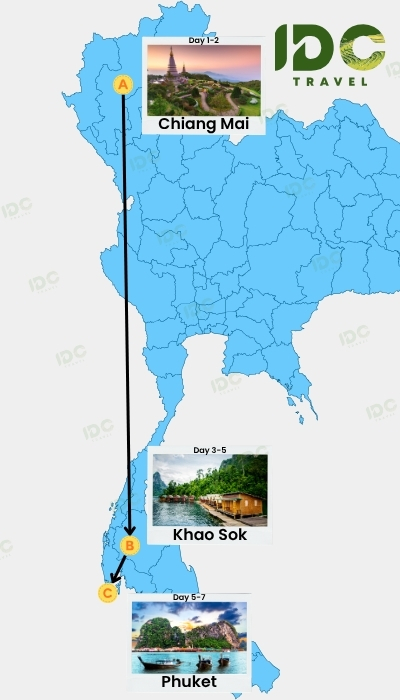
| Chiang Mai, Khao Sok and Phuket | Chiang Mai 2 nights, Khao Sok 2 nights, Phuket 2 nights | Active couples, repeat visitors and nature lovers | Temples, rainforest and Andaman coast in one week | Two transfer-heavy days and little margin for delays |
If this is your first visit and you want a holiday rather than a project, choose Bangkok and Phuket. If you have already seen Bangkok or care more about landscapes than capital-city icons, choose Chiang Mai, Khao Sok and Phuket. A seven-day plan should not attempt Bangkok, Chiang Mai, Chiang Rai, Krabi, Phuket and an island stay together.
Itinerary 1: Bangkok and Phuket for a First Thailand Trip
- Route: Bangkok and Phuket
- Best for: Families, couples and first-time visitors who want iconic sights plus a beach finish
- Strengths: Only one domestic flight, simple open-jaw international routing and a gentler final two days
- Weaknesses: Popular areas can feel busy; the route does not include Northern Thailand
- Best time: December to February is a useful compromise for Bangkok and the Andaman coast, although it is also a popular period
- Should avoid: Flying to Phuket late on Day 4 if you have a fixed boat trip early on Day 5
Day 1 | Arrive in Bangkok
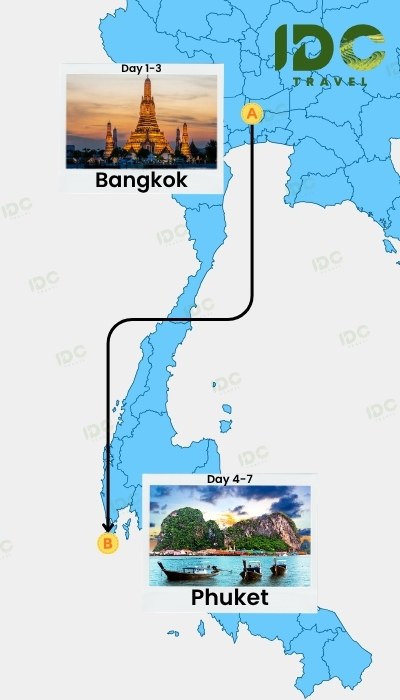
Check in and keep the first evening local. A riverside walk, food court or short neighborhood dinner is enough after a long flight.
Day 2 | Bangkok’s Royal and Riverside Story
Choose a focused temple and old-city program, dress respectfully and include a river or canal journey. Do not plan every famous temple on the same hot afternoon.
Day 3 | Markets, Food and a Personal Interest
Build the day around one theme: a market and food experience, contemporary Bangkok, family attractions or Ayutthaya as a full-day excursion. Keep a final Bangkok evening free.
Day 4 | Fly to Phuket
Use a daytime flight, allow for both airport transfers and check into the same Phuket base for three nights. Choose the west coast for beach access or Phuket Old Town for character and food.
Day 5 | Phuket Sea Day
Join an island or bay excursion only if marine conditions are suitable. Confirm the pier, transfer time and cancellation terms; popular tour names can hide very different group sizes and inclusions.
Day 6 | Phuket at Your Own Pace
Use the final full day for the beach, Phuket Old Town, a family activity or a slower coastal drive. This unstructured day protects the route from becoming seven consecutive early starts.
Day 7 | Depart Phuket
Leave a safe airport buffer and avoid a remote morning excursion. An international departure from Phuket prevents backtracking to Bangkok when suitable flights are available.
>>> Want the easier itinerary arranged for different ages? See IDC Travel’s live 7-Day Thailand Family Tour from Bangkok to Phuket. Ask the team to adjust the balance of temples, child-friendly activities and beach time for your group.
Itinerary 2: Chiang Mai, Khao Sok and Phuket for Nature Lovers
- Route: Chiang Mai, Surat Thani area, Khao Sok National Park and Phuket
- Best for: Active travelers who prefer mountains and rainforest to a long Bangkok stay
- Strengths: Strong change of scenery and memorable nature experiences
- Weaknesses: Requires carefully timed flights and road transfers; rain can affect outdoor activities
- Best time: December to February provides one of the better compromises for Chiang Mai and the Andaman side
- Should avoid: This itinerary during a short connection, with oversized luggage or when anyone in the group dislikes frequent moves
Day 1 | Arrive in Chiang Mai
Settle near the Old City or riverside and explore gently. Use the evening for a northern dinner rather than a distant attraction.
Day 2 | Chiang Mai Temples and Craft Traditions
Visit selected temples and add a responsible craft, food or community experience. One well-guided cultural day is more rewarding than collecting every viewpoint.
Day 3 | Fly South and Transfer to Khao Sok
Choose a flight and road connection that arrive before dark where possible. Treat this as a transfer day with a short jungle walk or lodge activity, not a full sightseeing day.
Day 4 | Khao Sok and Cheow Lan Lake
Explore according to the park program and weather. Boat schedules, caves and trails can change for safety, so follow the guide and carry waterproof protection.
Day 5 | Khao Sok to Phuket
Travel west to Phuket and check in for two nights. Keep sunset and dinner flexible because road conditions can affect arrival time.
Day 6 | Phuket Coast or Islands
Choose either a full marine excursion or a beach and old-town day. Do not book a non-refundable speedboat trip until you understand the operator’s weather policy.
Day 7 | Depart Phuket
Use an international departure from Phuket if practical. If your ticket requires Bangkok, build a protected connection rather than separate flights with a tight transfer.
>>> Ready for a more active one-week journey? Explore IDC Travel’s live Thailand 7 Days Tour from the Jungle to the Sea, linking Chiang Mai, Khao Sok and Phuket. It is naturally fast-paced, so ask about private transfers and flight timings before confirming.
Estimated Cost for 7 Days in Thailand
These ranges are per person for seven days and six nights, assuming two people share a room. They exclude international and domestic flights, visa costs, insurance, major shopping and luxury nightlife.
| Cost category | Budget | Mid-range | Premium |
| Accommodation for 6 nights | USD 150-330 | USD 420-900 | USD 1,200-3,000 |
| Meals and drinks | USD 105-210 | USD 245-490 | USD 560-1,050 |
| Ground and water transport | USD 95-260 | USD 280-720 | USD 800-2,000 |
| Guides and activities | USD 130-560 | USD 400-1,100 | USD 1,000-2,500 |
| Estimated ground total | USD 480-1,360 | USD 1,345-3,210 | USD 3,560-8,550 |
Domestic flight prices should be compared separately because baggage allowance, travel date and booking timing change the real fare. The nature route usually costs more in transfers and guided activities; the Bangkok and Phuket itinerary makes it easier to control spending with free beach time and public-city options.
Essential Travel Guide for One Week in Thailand
Do You Need a Visa and TDAC for Thailand?
Entry conditions depend on nationality, passport type and length of stay. Check your case through the Ministry of Foreign Affairs’ official Thai e-Visa website before paying for non-refundable flights. Submitting an application does not guarantee approval, and a visa exemption that applies to one nationality may not apply to another.
Non-Thai nationals entering Thailand must also complete the Thailand Digital Arrival Card, or TDAC. According to the official TDAC guide, it can be submitted within three days before arrival, including the arrival date. TDAC is an arrival form, not a visa, and a new submission is required for each entry.
How Should You Handle Cash, Cards and ATMs?
Thailand uses the Thai baht, or THB. Cards are convenient at established hotels, shopping centres and larger restaurants, but cash is still useful for markets, food stalls, local transport and small businesses. Withdraw before entering Khao Sok or beginning a boat programme, where finding a suitable ATM may be difficult.
Check the local ATM fee and your own bank’s foreign-use charge before confirming a withdrawal. When a terminal offers to convert the payment into your home currency, compare the displayed rate before accepting. IDC Travel’s Thailand currency guide explains the main denominations, payment habits and exchange options in more detail.
Where Should You Fly Into Thailand?
Thailand has several useful international gateways, but they serve different parts of the country. Bangkok has two major airports: Suvarnabhumi Airport (BKK), the main long-haul gateway, and Don Mueang International Airport (DMK), which handles many regional and low-cost services. Chiang Mai International Airport (CNX) and Mae Fah Luang–Chiang Rai International Airport (CEI) serve Northern Thailand, while Phuket International Airport (HKT) is the most useful gateway for the Andaman coast. Hat Yai International Airport (HDY) primarily supports journeys in the Deep South.
Do not choose an airport by name alone. Compare the international route, domestic connection, baggage allowance and final road transfer together. BKK and DMK are separate airports, so a self-transfer between them requires a substantial time buffer.
Which Airports Work Best for These Two Itineraries?
For the Bangkok and Phuket itinerary, arrive through BKK or DMK and depart from HKT when a suitable international flight is available. Schedule the Bangkok-to-Phuket flight during the day if Day 5 contains a fixed boat trip. A late arrival, baggage delay or missed self-connection could otherwise affect the most weather-sensitive part of the week.
For the Chiang Mai, Khao Sok and Phuket itinerary, an international or regional arrival through CNX can remove unnecessary time in Bangkok. Compare flights to Phuket and Surat Thani before choosing the transfer to Khao Sok. The shortest flight is not always the quickest overall option once baggage collection and the onward drive are included. Departing from Phuket normally avoids backtracking after the final beach stay.
Families, small groups and travelers carrying substantial luggage can use IDC Travel’s Thailand car rental with driver service for airport pickup and suitable overland sectors. Confirm the terminal, vehicle size, luggage capacity and final drop-off point before travel.
If your international ticket does not fit either gateway pattern, contact IDC Travel before confirming separate domestic flights. The team can check whether the proposed connections leave enough time for baggage, airport changes and road transfers.
Should You Buy a Thai SIM or eSIM?
A local SIM or eSIM is useful for airport pickups, maps and last-minute weather updates. Buy from an official operator counter or website, activate the service and test mobile data before leaving Bangkok, Chiang Mai or Phuket. For example, AIS lists official tourist-SIM counters at Bangkok, Chiang Mai and Phuket airports in its current purchase guide.
Coverage can weaken inside Khao Sok, on lake programmes and during island excursions. Save hotel addresses, tickets and driver contacts offline, agree on a meeting point before boat trips and carry a charged power bank. No provider should be assumed to work everywhere.
When Is the Best Time to Visit Thailand for 7 Days?
November to February is the easiest all-round period for either seven-day itinerary. The weather is generally more comfortable in Bangkok and Northern Thailand, while Phuket and the Andaman coast are usually within their stronger period for beach and marine activities. This is also a popular travel season, so well-located hotels and convenient flights may need earlier booking.
Thailand does not follow one identical weather calendar nationwide. The North and central regions broadly move through a cooler period, a hot season and a rainy season. Southern beach conditions vary by coast, and the Andaman side normally offers more dependable beach planning from November to April.
- November to April usually provides the most practical overlap in Bangkok and Phuket. December to February is more comfortable for Bangkok sightseeing, while March and April remain workable for Phuket but can feel considerably hotter in the city.
- December to February offers the clearest compromise in Chiang Mai, Khao Sok and Phuket. Chiang Mai is cooler, Phuket is within its stronger beach period and the long road transfers are less tiring than during peak heat.
- March and April: These months can work for travelers who tolerate heat, but haze may affect visibility and air quality in Northern Thailand. Songkran in mid-April adds cultural value, although accommodation, transport and popular activities can become busier.
- May to October: Khao Sok is green and atmospheric, but heavy rain can change trails, caves and lake programs. Sea conditions around Phuket may also affect boat departures. Keep a land-based alternative available rather than building the week around one non-refundable marine excursion.
Review IDC Travel’s best time to visit Thailand, then check local forecasts and operator decisions shortly before weather-sensitive activities.
What to Eat During Seven Days in Thailand
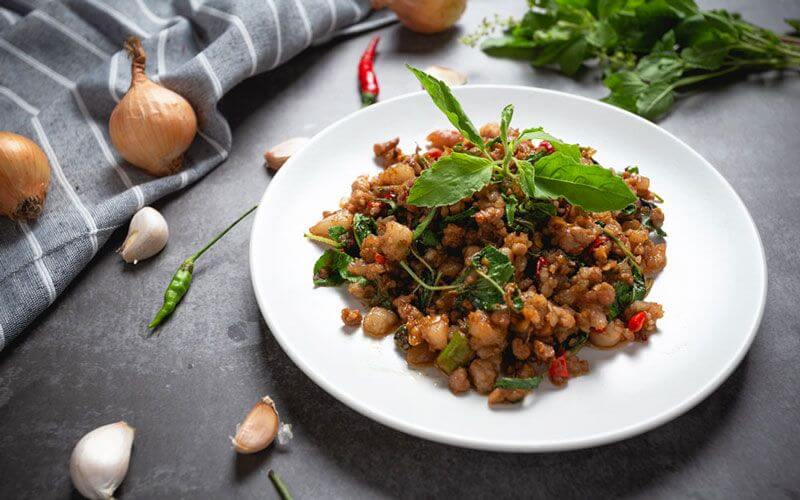
- Pad kra pao (holy basil stir-fry): Meat or tofu stir-fried with holy basil and chilies, often served over rice with a fried egg.

Pad kra pao (holy basil stir-fry)
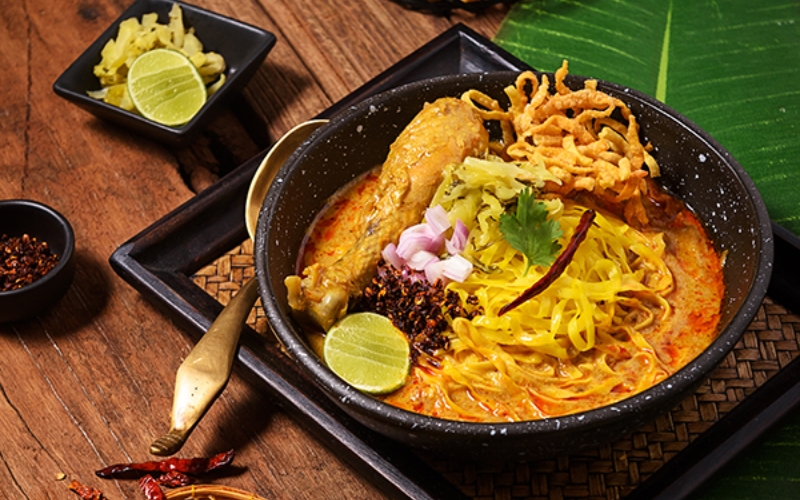
- Khao soi (northern curry noodles): Chiang Mai’s coconut curry noodle soup topped with crisp noodles, pickled greens and lime.
Khao soi (northern curry noodles)
- Sai oua (northern herb sausage): A fragrant grilled sausage seasoned with lemongrass, kaffir lime and herbs.
Sai oua (northern herb sausage)
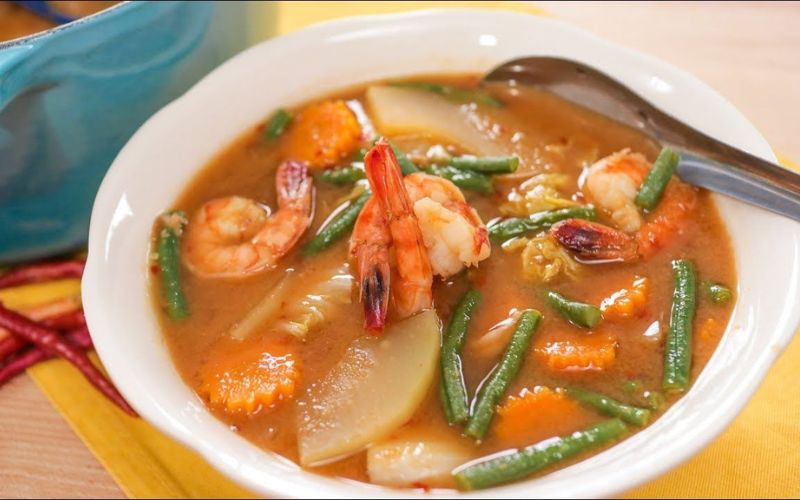
- Gaeng som (southern sour curry): A spicy, tangy curry commonly cooked with fish and vegetables.
Gaeng som (southern sour curry)
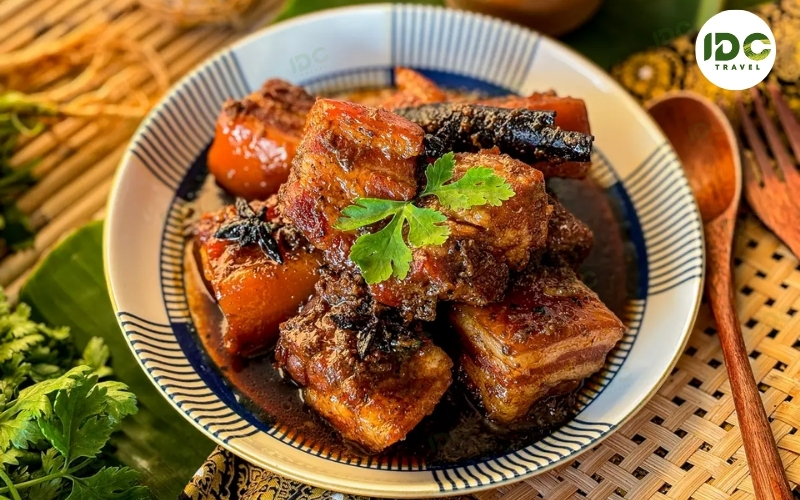
- Moo hong (Phuket-style braised pork): Pork slowly cooked with pepper, garlic and soy-based seasoning.
Moo hong (Phuket-style braised pork)
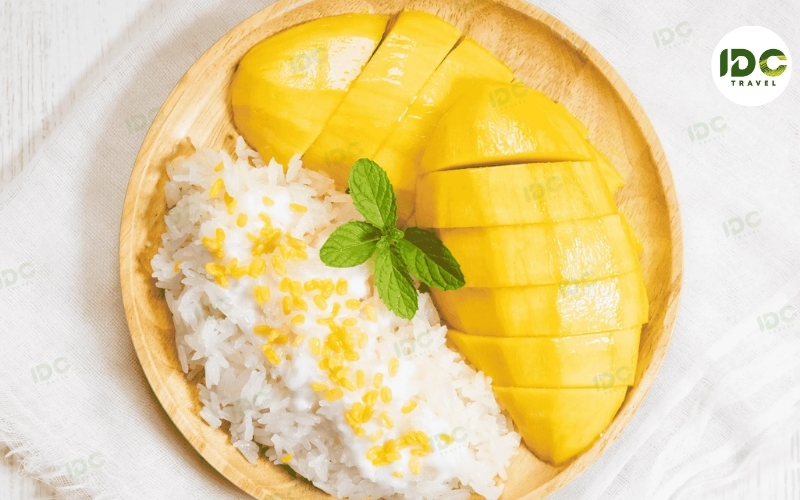
- Khao niew mamuang (mango sticky rice): Sweet sticky rice with coconut milk and ripe mango.
Khao niew mamuang (mango sticky rice)

Travelers with allergies should carry a Thai-language allergy card. Fish sauce, shrimp paste, peanuts and coconut may appear in seasoning even when they are not visible in the finished dish.
How to Make One Week Feel Longer
A seven-day Thailand itinerary feels longer when transfers are reduced and each destination has a clear purpose. The goal is not to fit more places into the week, but to protect the hours that would otherwise disappear into airports, hotel changes and repeated packing.
- Use an open-jaw flight plan: Arrive in the city where the route begins and fly home from Phuket when possible. Returning to Bangkok only for the international departure can consume a large part of the final day.
- Limit the trip to two main bases: Bangkok and Phuket provide a balanced first-time route, while Chiang Mai, Khao Sok and Phuket create a faster nature-focused journey. Avoid adding another overnight destination unless it replaces an existing stop.
- Keep one hotel in each destination: Changing beach areas rarely adds enough value to justify packing, checking out and transferring again. Choose the location carefully, then use day trips for nearby experiences.
- Place flexibility after the hardest transfer: Keep the program lighter after an international flight, domestic flight or long Khao Sok transfer. This gives the route space to recover if transportation is delayed.
- Match hotel spending to actual use: Before upgrading every night, review the Thailand trip budget breakdown. Spend more on a hotel when its location, facilities or resort experience will genuinely be used.
- Replace destinations instead of adding them: Use IDC Travel’s guide to the best places to visit in Thailand to choose the places that best fit your interests. If Bangkok, Chiang Mai and a southern island are all essential, extend the trip by at least four days rather than compressing them into one week.
One week feels complete when the route tells one coherent story. It feels rushed when every free hour becomes another transfer or attraction.
Turn Seven Days into Your Version of Thailand
One week is enough when every transfer earns its place. IDC Travel can align the route with your international flights, preferred hotel style, children’s ages and tolerance for early starts. Create your tailor-made Thailand holiday for a private plan built around your priorities.
Read more: