
Mui Ne has always been a specific kind of place, not a generic beach resort, but a narrow strip of coast where consistent northeast winds, giant sand dunes, and a working fishing harbor came together in a way that had no real equivalent elsewhere in Vietnam. That specific character remains intact in 2026, even as the administrative map around it has changed significantly.
Since July 1, 2025, Mui Ne is no longer part of Binh Thuan Province. Vietnam’s sweeping administrative reform merged Binh Thuan, Lam Dong, and Dak Nong into a single new Lam Dong Province, with Da Lat as the provincial capital. Within that merger, Phan Thiet city’s 19 commune-level units were reorganized into 7 new wards. Mui Ne ward, Ham Tien ward, and Thien Nghiep commune were consolidated into a single new Mui Ne Ward. Phan Thiet itself is now formally Phan Thiet Ward within the new Lam Dong Province structure.
For travelers, the changes are largely administrative. The dunes are still there. The wind still blows from November to March. The fishing fleet still comes in before sunrise. What has changed is the context: Mui Ne is now identified by the provincial government as a coastal anchor in a tourism triangle linking Da Lat, Mui Ne, and Ta Dung (former Dak Nong), with serious investment planned around the Mui Ne National Tourist Area’s approved master plan covering 14,760 hectares through to 2050.
Where Is Muine Located?
- Location: Mui Ne Ward, Lam Dong Province, 200 km east of Ho Chi Minh City
- Area: 118.59 km²
- After 2025 provincial merger: Now people know Mui Ne and Phan Thiet as the two new wards of Lam Dong province. Before that, Mui Ne belonged to Phan Thiet city, Binh Thuan province, which was merged with Dak Nong, Lam Dong provinces.
- Population: 50.166
- Population density: 423 person/km²
- Beach strip: The resort and kiteboarding strip runs roughly 17 km along the coast
- Known for: Red and white sand dunes, kiteboarding and windsurfing, working fishing harbor, Phan Thiet fish sauce, Cham towers
- Best for: Wind sports, dune photography, mid-range beach holidays, day trips from HCMC
- Airport: Phan Thiet Airport under development within the new Mui Ne Ward boundary (project restarted post-merger; 543-hectare site, 2 million passenger annual capacity when complete)
Mui Ne is a coastal town located in the Lam Dong Province in central Vietnam. It is situated on the southeastern coast of Vietnam, around 200 kilometers east of Ho Chi Minh City.
How to Get to Mui Ne
From Ho Chi Minh City by car or bus: Bus services depart from Mien Dong Bus Station in HCMC throughout the day. Confirm your driver or bus uses the expressway, some older itineraries still route via the coast.
By train: Train services from HCMC reach Phan Thiet station in about 4 hours. From the station, taxi or hotel shuttle to the Mui Ne strip takes 15 minutes. Less convenient than bus for most travelers but a reasonable option if you prefer trains.
By air: No commercial flights currently serve Phan Thiet. Phan Thiet Airport, a long-planned dual-use airport with a 3,050-metre runway on a 543-hectare site inside the new Mui Ne Ward boundaries, has been restarted post-merger and is planned to eventually handle 2 million passengers per year. Once operational, it will be the second airport in the new Lam Dong Province after Lien Khuong Airport in Da Lat. No confirmed opening date as of mid-2026; check current status before planning around it.
Combined Da Lat and Mui Ne itinerary: One practical consequence of the merger is the improved policy alignment between Da Lat and Mui Ne as a combined circuit. The two destinations are now within the same province, and the new highland-to-coast tourism corridor is being actively promoted. The road distance from Da Lat to Mui Ne is about 200 km, roughly 4 hours.
>>> Our Vietnam tours can build highland-to-coast itineraries combining both.
Best Time to Visit Mui Ne
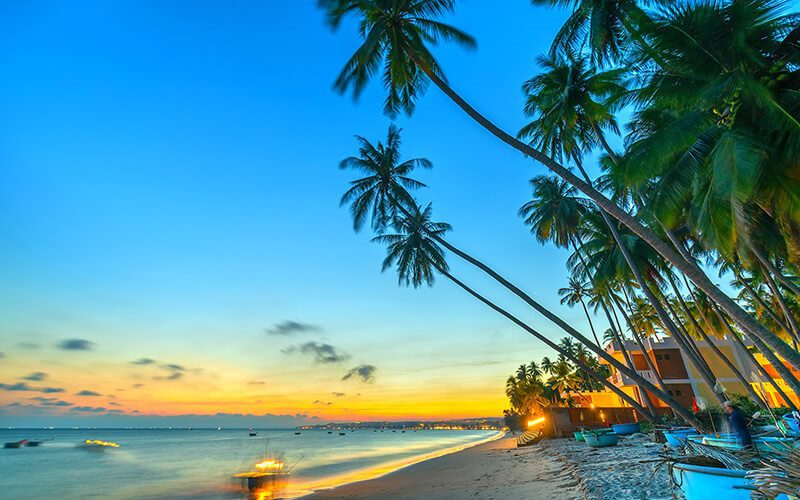
Mui Ne – Phan Thiet
November to April is the dry season and the most reliable window for a beach visit. The northeast monsoon wind peaks from December to February, consistent 15 to 20 knot winds blow across the bay for extended periods, which is exactly what makes Mui Ne the most reliable kiteboarding destination in Southeast Asia.
May to October brings the wet season. Rain is typically afternoon rather than all-day, and the wind drops significantly. The sea is calmer and the dunes are quieter. Wind sport operations scale back during this period.
July and August are peak domestic summer holiday months. The resort strip is at its busiest and accommodation should be booked well ahead.
The dune experience changes by season. Red dune colors are deeper in the dry months when vegetation on the surrounding scrubland is sparse. After rain, the sand takes on different textures and the vegetation contrast increases.
Top Things to Do in Mui Ne
1. Doi Cat Hong (Red Sand Dunes)
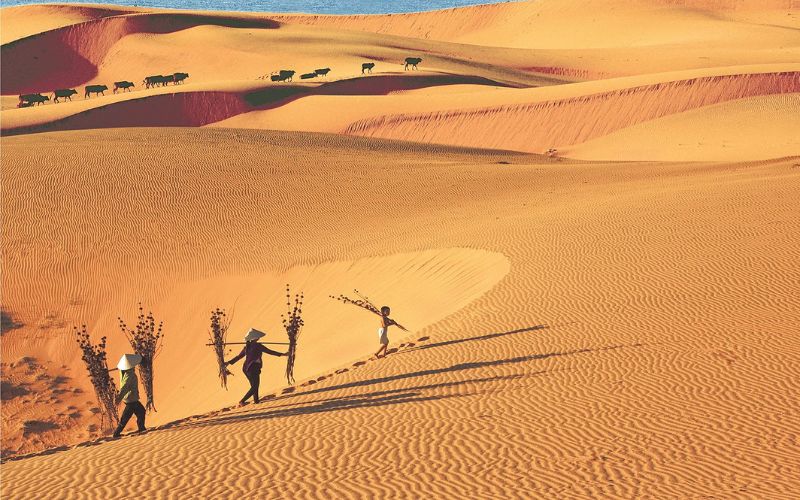
Doi Cat Hong (Red Sand Dunes)
About 15 km east of central Mui Ne near Hong Lam village, the red sand dunes are the most photographed landscape in the area. Deep orange-red in color and reaching 50 to 80 meters at the highest formations, they sit behind coastal scrubland in a way that looks entirely out of place, and entirely right, against the blue of the South China Sea in the background. Plastic sleds are rented at the base for a few thousand dong per run down the steeper slopes.
Sunrise around 5:30am is the right time: the light is warm, the sand is cool enough for bare feet, and you will have the dunes mostly to yourself for about 45 minutes before the tour groups arrive. Midday is uncomfortable and over-lit. Sunset is also good but more crowded.
2. Bau Trang (White Sand Dunes)
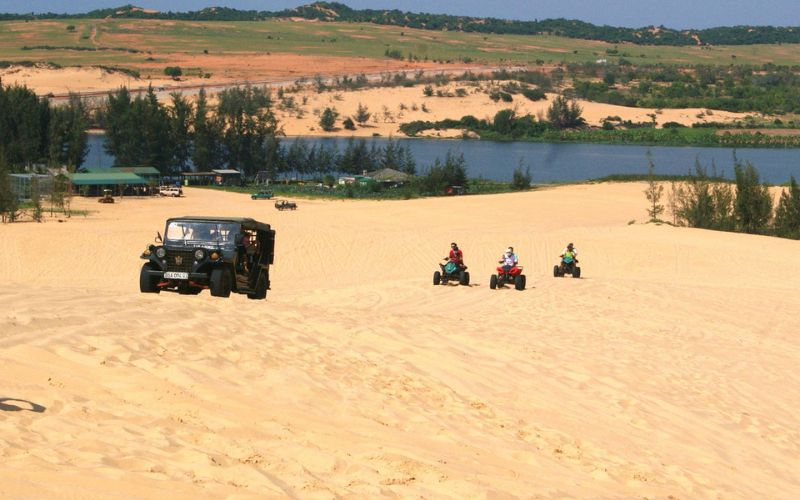
Bau Trang (White Sand Dunes)
About 35 km from central Mui Ne, this larger dune complex surrounds a freshwater lake and extends over a considerably bigger area than the red dunes. The white sand is very bright in direct light, bring polarized sunglasses or the glare becomes exhausting quickly. Quad bikes and dune buggies can be hired at the entrance; walking on foot is also perfectly manageable.
The combination of white sand against the blue-green lake and surrounding coastal scrub makes this a completely different visual experience from Doi Cat Hong. Many visitors combine both dune sites in a single half-day organized tour that also includes Fairy Stream and the fishing harbor. This is the practical way to cover all four in one morning.
3. Suoi Tien (Fairy Stream)
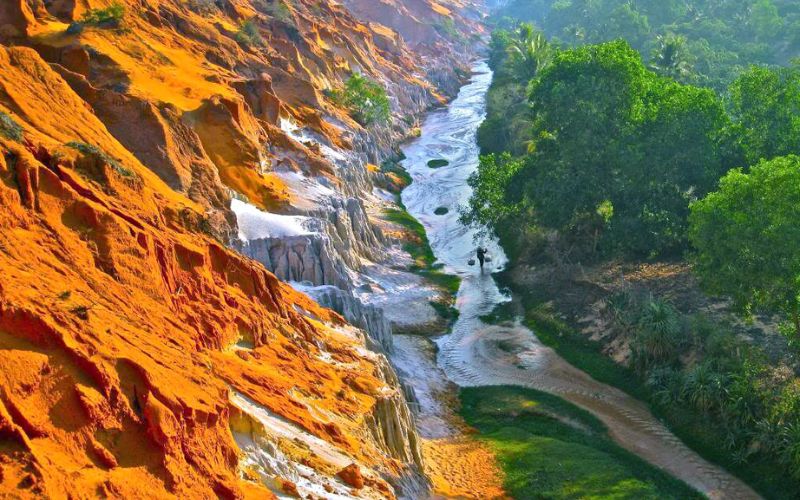
Suoi Tien (Fairy Stream)
A shallow stream running through a small canyon of multi-colored sandstone walls in deep oranges and brick reds. You walk barefoot through ankle-deep water for about 30 minutes one way, past the eroded rock formations and overhanging vegetation. It is short, easy, and unlike anything else in southern Vietnam. Not scenically grand in scale but very distinctive in texture and color. Best in the early morning before the midday heat builds in the canyon.
4. Mui Ne Fishing Harbor
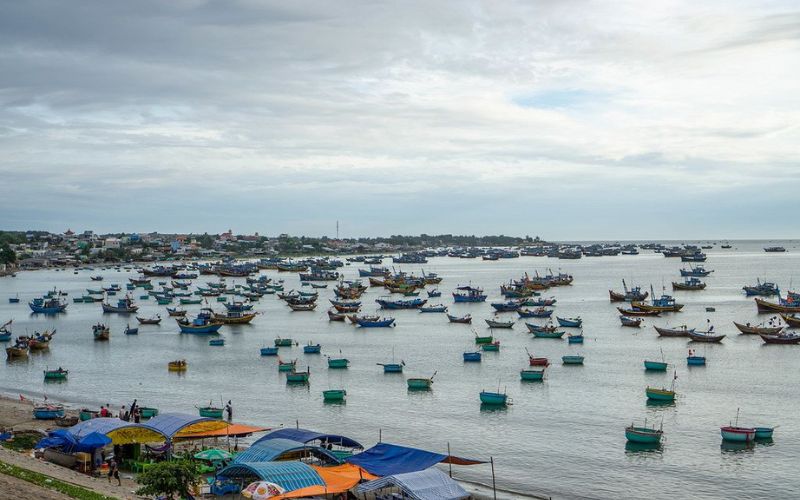
Mui Ne Fishing Harbor
The harbor at the eastern end of the beach strip is a working fishing village first and a tourist attraction second. The round basket boats (thung chai) used for short-range fishing are lined up on the beach, and the night fleet returns between 4:30 and 6:30am with the catch. At that hour there are buyers, traders, ice trucks, and processing activity happening simultaneously in a functional working harbor that has nothing to do with tourism.
Coming here at 5:30am on a clear morning is one of the more honest travel experiences in coastal southern Vietnam. The fish market smell is real, the noise is real, and nobody is performing for visitors.
5. Kiteboarding and Windsurfing
Mui Ne’s wind credentials are not exaggerated. The northeast monsoon wind blows consistently across the bay from November through March with minimal geographic obstruction, producing reliable conditions that have attracted international kiteboarding competition and a genuinely developed coaching infrastructure.
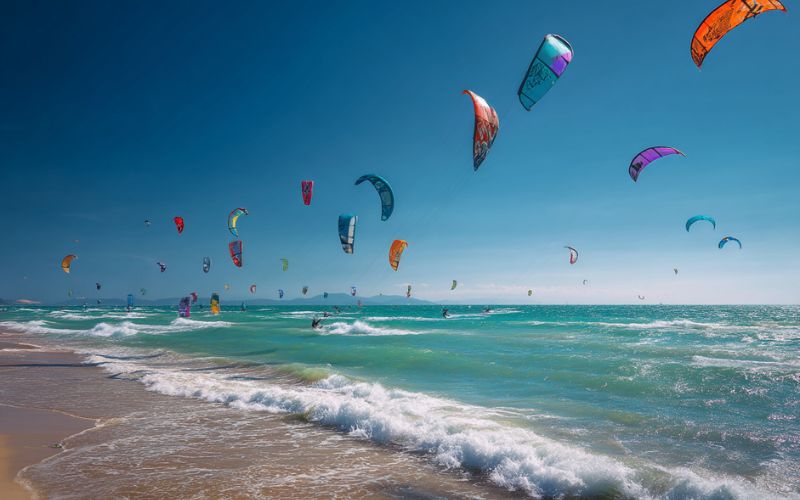
Muine Kiteboarding and Windsurfing
C2Sky, Manta Kite School, and Jibe’s Beach Club are the longest-established operators on the strip; all offer English-language instruction, equipment rental, and multiday certification courses.
Beginner lessons typically run 3 to 4 hours on the water; full beginner-to-independent certification takes 3 to 4 days. The bay is shallow and the bottom is sandy for a considerable distance from shore, which matters practically for learners.
Even non-participants find the spectacle worth seeing in peak wind season: dozens of kites in the air simultaneously over the bay is visually arresting in a way that photographs do not fully capture.
6. Po Sah Inu Cham Towers
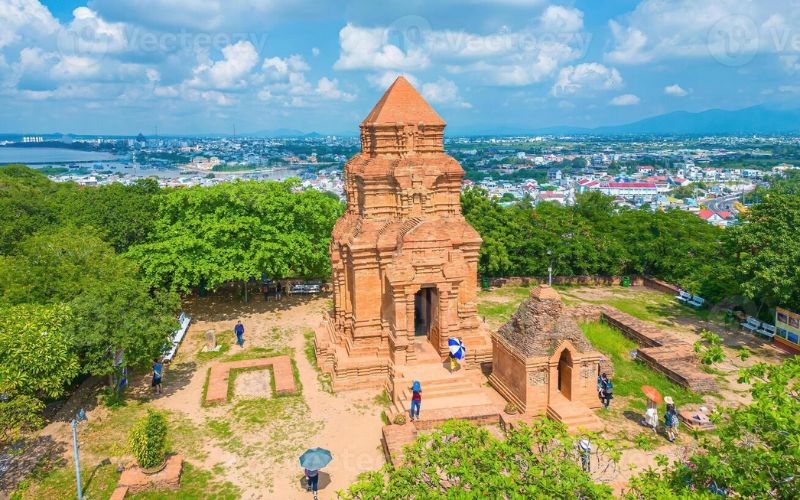
Muine Po Sah Inu Cham Towers
Three 8th-century Cham Hindu towers on a hillside about 7 km from central Mui Ne. Older than the more famous My Son sanctuary by several centuries and smaller in scale, but historically significant as some of the earliest surviving Cham architecture on the south-central coast. The hilltop site gives a wide view over the rooftops of Phan Thiet warrd and out to the coastline east toward Mui Ne. Entry is cheap and the site is rarely crowded outside local festivals.
7. Phan Thiet Ward and the Former Provincial Capital Area
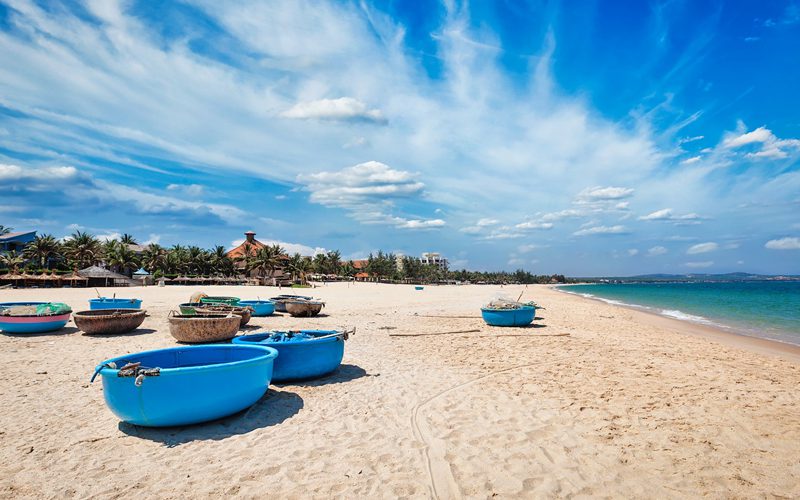
Phan Thiet Beach
Phan Thiet Ward in 2026 still retains the urban character of a functioning Vietnamese coastal city that has not been fully absorbed into resort culture. The morning market, the Duc Thanh School historical relic (where Ho Chi Minh briefly taught in 1910), and Ong Hoang Tower on the hillside above the city give a non-resort dimension to the visit. The Phan Thiet fish sauce factories clustered along the river are open to visitors and explain the 18-month fermentation process that produces one of Vietnam’s most distinctive regional condiments.
Mui Ne and Phan Thiet Food
Banh canh cha ca is the standard Phan Thiet breakfast: thick rice noodle soup with fish cake, served at the morning market stalls from around 5am. The fish cake (cha ca) here uses fresh catch from the overnight fleet and is noticeably different from the mass-produced version sold elsewhere in Vietnam.
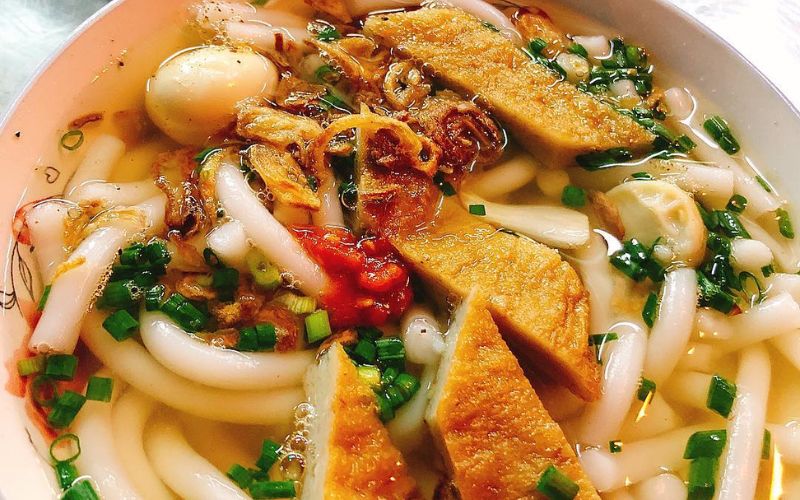
Banh canh cha ca Muine
Banh xeo Phan Thiet is the local rice flour crepe, thinner and crispier than the Hoi An version, filled with fresh shrimp from the surrounding waters and served with the local greens and dipping sauce.

Banh Xeo
Seafood on the Mui Ne strip: The restaurants along the resort strip serve fresh catch ordered by weight from display tanks or ice trays. Squid, tiger prawns, red snapper, and mackerel from the previous night’s catch. Pricing is by the kilogram; agree on the price before it goes to the kitchen. The restaurants at the fishing harbor end of the strip tend to be cheaper and fresher than those at the resort end.
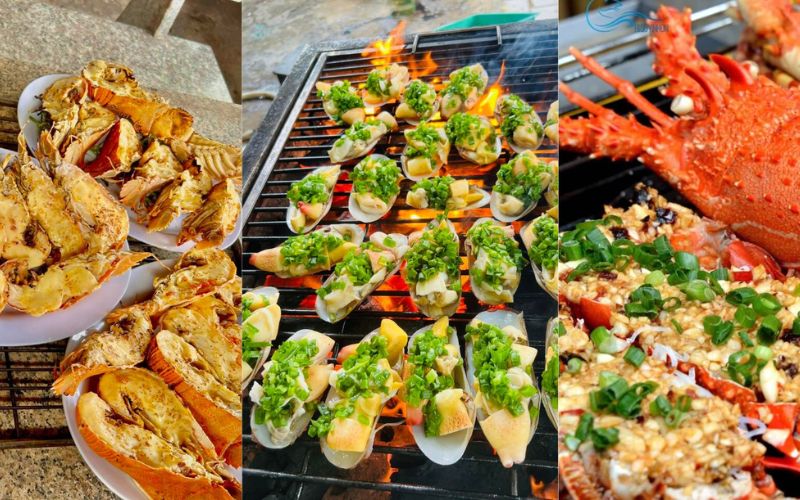
Seafood Muine
Estimated Travel Costs in Mui Ne
Since the 2025 provincial merger, Mui Ne is officially part of Lam Dong Province, but its cost structure as a beach destination remains consistent with its former Binh Thuan profile. The Phan Thiet Expressway from HCMC has reduced private car costs meaningfully. The main spending variables are accommodation tier, whether you take a kiteboarding course, and transport from HCMC.
Prices below are estimates for international travelers and may vary by season and booking time.
| Category | Budget | Mid-Range | Luxury |
| Accommodation (per night) |
200,000 – 450,000 VND (~$8-$18) |
700,000 – 2,200,000 VND (~$28-$87) |
2,800,000 – 9,000,000 VND (~$110-$354) |
| Meal per person | 30,000 – 70,000 VND (~$1.18-$2.76) |
100,000 – 300,000 VND (~$3.94-$11.81) |
400,000 – 1,200,000 VND (~$15.75-$47.24) |
| Red/White Dunes entry + sled rental | 20,000 – 50,000 VND (~$0.79-$1.97) |
20,000 – 50,000 VND (~$0.79-$1.97) |
20,000 – 50,000 VND (~$0.79-$1.97) |
| Fairy Stream entry | 10,000 – 15,000 VND (~$0.39-$0.59) |
10,000 – 15,000 VND (~$0.39-$0.59) |
10,000 – 15,000 VND (~$0.39-$0.59) |
| Po Sah Inu Cham Towers entry | 15,000 VND (~$0.59) |
15,000 VND (~$0.59) |
15,000 VND (~$0.59) |
| Kiteboarding beginner course (3 days) |
– | 3,000,000 – 5,000,000 VND (~$118-$197) |
5,500,000 – 8,000,000 VND (~$217-$315) |
| Dune half-day tour (transport + all sites) |
150,000 – 250,000 VND (~$5.91-$9.84) |
300,000 – 500,000 VND (~$11.81-$19.69) |
700,000 – 1,500,000 VND (~$27.56-$59.06) |
| Motorbike rental (per day) |
100,000 – 150,000 VND (~$3.94-$5.91) |
150,000 – 250,000 VND (~$5.91-$9.84) |
– |
| Sleeper bus HCMC-Mui Ne (one way) |
150,000 – 250,000 VND (~$5.91-$9.84) |
200,000 – 350,000 VND (~$7.87-$13.78) |
– |
| Private car HCMC-Mui Ne (return) |
– | 1,200,000 – 2,000,000 VND (~$47-$79) |
2,200,000 – 3,500,000 VND (~$87-$138) |
| Total 5-day trip | 2,000,000 – 4,000,000 VND (~$79-$157) |
7,000,000 – 15,000,000 VND (~$276-$591) |
18,000,000 – 45,000,000 VND (~$709-$1,772) |
| Total 7-day trip | 2,800,000 – 5,600,000 VND (~$110-$220) |
9,800,000 – 21,000,000 VND (~$386-$827) |
25,000,000 – 63,000,000 VND (~$984-$2,480) |
| Total 14-day trip | 5,600,000 – 11,200,000 VND (~$220-$441) |
19,600,000 – 42,000,000 VND (~$772-$1,654) |
50,000,000 – 126,000,000 VND (~$1,969-$4,961) |
Kiteboarding season runs November to March. Peak domestic summer holiday pricing (July to August) increases accommodation costs on the strip. Always recheck costs at time of booking.
Mui Ne Travel Tips
Accommodation choice matters more in Mui Ne than in most Vietnamese beach towns because private beach access varies considerably. Many mid-range properties on the strip share the same stretch of beach as budget guesthouses nearby; the only meaningful differentiator is whether a resort’s frontage has clean sand and usable beach furniture. Walk the beach at your short-list properties before confirming.
Signage along the strip still reflects the dominant demographics. Russian-language menus and Vietnamese-only signs are common toward the eastern end. English menus are more consistent from Mui Ne ward center westward toward Phan Thiet.
The combined half-day dune tour (red dunes at sunrise, white dunes, Fairy Stream, fishing harbor) is the most efficient way to cover the signature Mui Ne experiences. It runs from around 5am to noon. Book through your accommodation for transport and timing. Attempting to do all four independently by motorbike is possible but adds logistics and travel time between sites.
Regarding the provincial merger: the change from Binh Thuan to Lam Dong Province is administrative. Addresses on booking platforms, GPS, and official documents are being updated but may show either the old or new provincial designation depending on how recently they were updated. If booking accommodation or transport, both names refer to the same physical location.
Plan Your Mui Ne Trip with IDC Travel
We can arrange Mui Ne as a standalone beach extension from HCMC, as part of a south-central Vietnam coastal circuit, or as part of the new highland-to-coast corridor combining Da Lat and Mui Ne within the single new Lam Dong Province. Contact us for current itinerary options.