
Angkor Wat is the world’s largest religious monument. That is a fact most visitors read before they arrive and still find hard to process until they are actually standing at the end of the 475-meter causeway with the five lotus-tower silhouette rising in front of them. The complex covers over 200 square kilometers in total, encompasses more than 70 major temples and structures, and was built between the 9th and 15th centuries by the Khmer Empire.
Most visitors get one day. That is enough to see Angkor Wat and Angkor Thom, which are the essentials. But the site rewards more time, and this guide is structured to help you decide how long to stay, how to organize your visit, and what to do beyond the main complex.
Where Is Angkor Wat Located?
- Location: 6 km north of Siem Reap, Siem Reap Province, Cambodia
- UNESCO status: World Heritage Site (1992), as part of Angkor Archaeological Park
- Built: Main temple constructed in the early 12th century by King Suryavarman II
- Religion: Originally Hindu, later converted to Buddhist use
- Entrance pass: Required, available at the main ticket office 6 km from the temples
- Ticket prices (2026): 1-day pass $37, 3-day pass $62, 7-day pass $72
Angkor Wat is a temple complex at Angkor, near Siem Reap, Cambodia, that was built in the 12th century by King Suryavarman II (reigned 1113-c. 1150). The pass must be purchased at the Angkor Enterprise ticket center before visiting. Photography of the pass is not accepted; carry the card with you throughout the complex.
How to Get to Angkor Wat
By air: Siem Reap International Airport (REP) reopened in 2023 and handles direct flights from Bangkok, Singapore, Kuala Lumpur, and several Chinese cities. The new Siem Reap Angkor International Airport (SAI), 50 km from the town, began operations in late 2023 and serves additional routes.
By bus: Regular coach services connect Siem Reap with Phnom Penh (5 to 6 hours), Bangkok (approximately 10 hours), and Ho Chi Minh City (approximately 12 hours via the border crossing at Moc Bai).
From Siem Reap to the temples: Tuk-tuk is the standard and most enjoyable way to get around the Angkor complex. Most drivers offer a “small circuit” (the main temples) or a “grand circuit” (outer temples) at set prices for the day, typically $15 to $25. Bicycles can also be rented in Siem Reap for around $3 to $5 per day, and the flat terrain makes cycling to the temples surprisingly easy.
>>> We include Angkor Wat in its Cambodia tour packages with knowledgeable local guides who provide context beyond what the site’s limited signage explains.
Best Time to Visit Angkor Wat
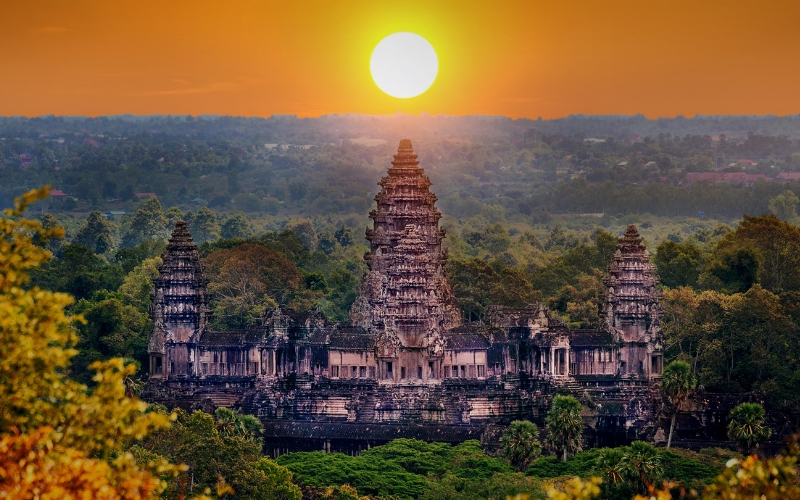
angkor wat temple
November to February is the peak season and generally the best weather: cool, dry, and clear. Sunrise visits are particularly popular during this period and crowds at Angkor Wat itself can be heavy.
March to May is dry but increasingly hot. April can reach 38 to 40°C. Early morning visits are essential. Fewer international crowds than the peak season.
June to October is the rainy season. The complex turns a vivid green, the moat fills completely, and the temple reflections in the water are exceptional. Rain typically falls in afternoon downpours rather than all day, which leaves morning visits largely unaffected. This is the least crowded period and, arguably, the most visually dramatic.
A note on sunrise: the sunrise crowd at Angkor Wat’s main reflection pool has grown significantly in recent years. If a peaceful sunrise is your goal, consider Angkor Thom’s Bayon temple or the Phnom Bakheng hill temple instead, both of which draw smaller crowds at the same time of day.
How to Organize Your Visit
1 Day at Angkor
Focus on Angkor Wat and Angkor Thom. Spend the morning at Angkor Wat (arrive by 6am if doing sunrise), break for lunch in Siem Reap during the hottest midday hours, then spend the afternoon at the Bayon and Ta Prohm. This is manageable but tiring.
2 Days at Angkor
Day 1: Angkor Wat in the morning, Angkor Thom (Bayon, Baphuon, Elephant Terrace) in the afternoon.
Day 2: Ta Prohm, Banteay Srei (intricate pink sandstone carvings, 25 km from the main complex), and the Roluos Group temples (the earliest Angkorian temples, 13 km southeast of Siem Reap).
3+ Days at Angkor
Add the remote temples: Beng Mealea (a largely unrestored temple consumed by jungle, 68 km from Siem Reap) and Koh Ker (a former capital of the Khmer Empire, 130 km away). Both require a car and a full day. Both are genuinely spectacular and receive a fraction of Angkor Wat’s visitor numbers.
Top Temples Beyond Angkor Wat
1. The Bayon (Angkor Thom)
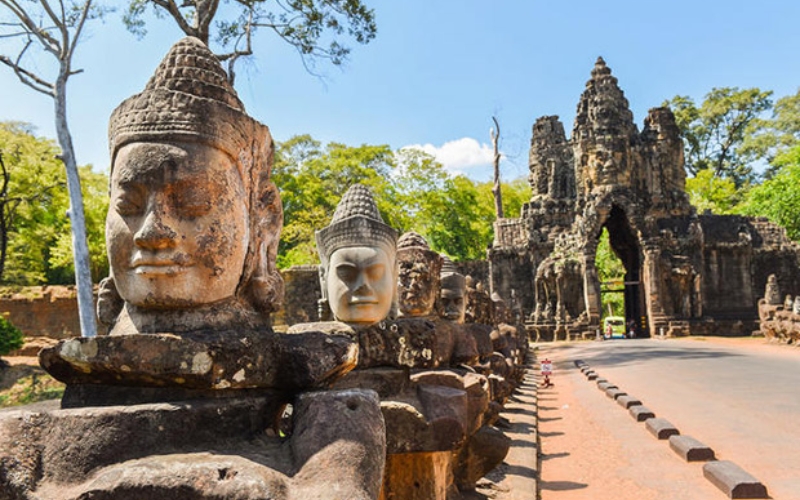
Smiling stone faces at the entrance of Bayon Temple, Angkor Wat
The state temple of Angkor Thom, built in the late 12th century by King Jayavarman VII, is famous for its 216 stone faces carved on 54 towers. The expressions are serene and slightly enigmatic; standing among them in the early morning, when the light comes low through the stone, is one of the genuine great experiences of Southeast Asian travel.
2. Ta Prohm
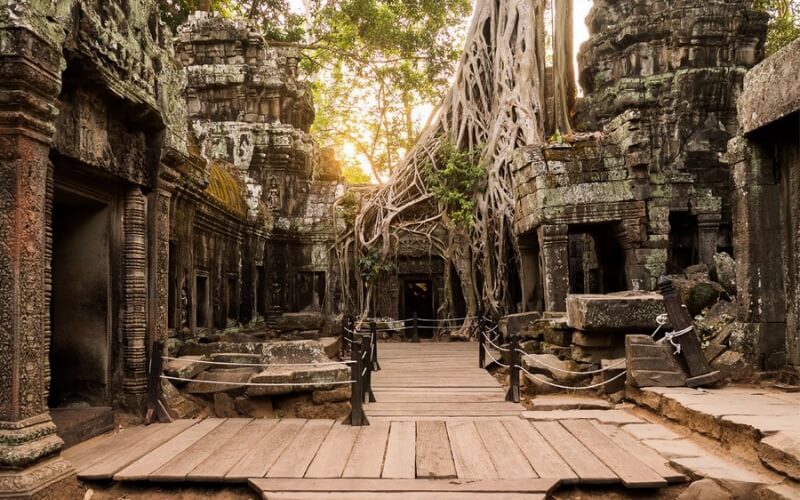
Ta Prohm
The temple has been partially left to the jungle, with fig and silk-cotton trees growing through the stonework. It is atmospheric and photogenic, but now heavily visited. Go at opening time (7:30am) or late afternoon for manageable crowds.
3. Banteay Srei
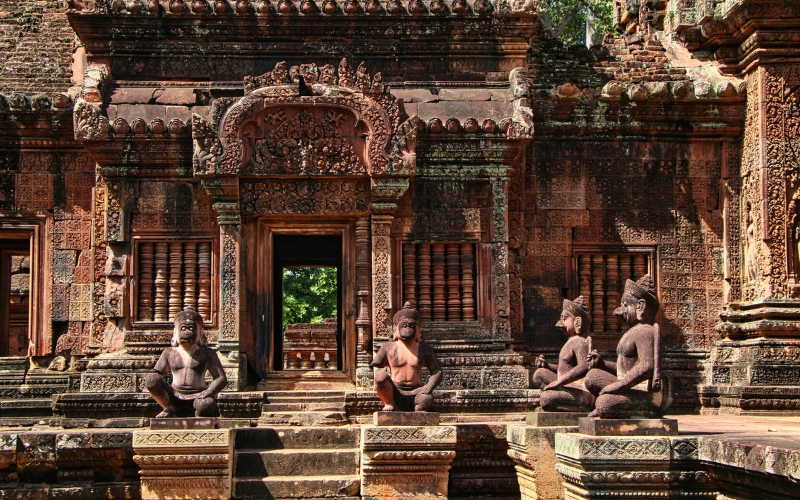
Banteay Srei still retains intact statues and wall sculptures
Smaller than the main complex temples but considered by many archaeologists as the artistic highpoint of Khmer craftsmanship. The pink sandstone is carved to a depth and detail that the larger temples do not match. The 50-kilometer round trip from Siem Reap is worth making.
Estimated Travel Costs at Angkor Wat
The Angkor Archaeological Park pass is the single largest fixed cost and is non-negotiable at any travel style. Beyond that, Siem Reap is very affordable: transport, food, and accommodation are all excellent value. The main mid-range upgrade is a licensed guide, which transforms the experience of the bas-relief panels and iconographic program. Hot air balloon flights represent the main luxury activity spend.
Prices below are estimates for international travelers and may vary by season and booking time.
| Category | Budget | Mid-Range | Luxury |
| Accommodation (per night) |
40,000 – 82,000 KHR (~$10-$20) |
140,000 – 328,000 KHR (~$34-$80) |
369,000 – 1,025,000 KHR (~$90-$250) |
| Angkor 1-day pass | 151,700 KHR (~$37) |
151,700 KHR (~$37) |
151,700 KHR (~$37) |
| Angkor 3-day pass | 254,200 KHR (~$62) |
254,200 KHR (~$62) |
254,200 KHR (~$62) |
| Angkor 7-day pass | 295,200 KHR (~$72) |
295,200 KHR (~$72) |
295,200 KHR (~$72) |
| Tuk-tuk (full day, temple circuit) |
61,500 – 82,000 KHR (~$15-$20) |
82,000 – 102,500 KHR (~$20-$25) |
– |
| Licensed guide (full day) |
– | 123,000 – 205,000 KHR (~$30-$50) |
246,000 – 410,000 KHR (~$60-$100) |
| Meal per person | 8,200 – 16,400 KHR (~$2-$4) |
24,600 – 61,500 KHR (~$6-$15) |
82,000 – 205,000 KHR (~$20-$50) |
| Sunrise boat trip (Sras Srang) |
– | 61,500 – 102,500 KHR (~$15-$25) |
123,000 – 246,000 KHR (~$30-$60) |
| Hot air balloon (sunrise flight) |
– | – | 369,000 – 533,000 KHR (~$90-$130) |
| Total 5-day trip | 533,000 – 902,000 KHR (~$130-$220) |
1,230,000 – 2,255,000 KHR (~$300-$550) |
2,460,000 – 4,715,000 KHR (~$600-$1,150) |
| Total 7-day trip | 697,000 – 1,230,000 KHR (~$170-$300) |
1,640,000 – 3,075,000 KHR (~$400-$750) |
3,280,000 – 6,355,000 KHR (~$800-$1,550) |
| Total 14-day trip | 1,394,000 – 2,460,000 KHR (~$340-$600) |
3,280,000 – 6,150,000 KHR (~$800-$1,500) |
6,560,000 – 12,710,000 KHR (~$1,600-$3,100) |
Angkor pass prices are set by Angkor Enterprise and reviewed periodically. Passes must be purchased at the official ticket office before entering any temple. Always recheck current rates before booking.
Angkor Wat Travel Tips
- Dress code is enforced at all temples: shoulders and knees must be covered. Lightweight long clothing is the practical solution in the heat.
- Carry water. The complex is large and the heat is real. Drink more than you think you need.
- Hire a licensed guide for at least one day. The carvings tell detailed stories from Hindu mythology and Khmer history that are almost impossible to understand without explanation. The difference between a guided and unguided visit is substantial.
- Mosquito repellent is necessary, particularly in the rainy season and in the forested areas around Ta Prohm and Beng Mealea.
- The ticket office closes at 5:30pm. Do not leave buying your pass until the afternoon.
Visit Angkor Wat with IDC Travel
IDC Travel’s Cambodia tours include Siem Reap and Angkor itineraries designed by our team with firsthand knowledge of the complex. We can arrange airport transfers, licensed English-speaking guides, and accommodation in Siem Reap across all budget levels. Contact us to discuss your dates.